
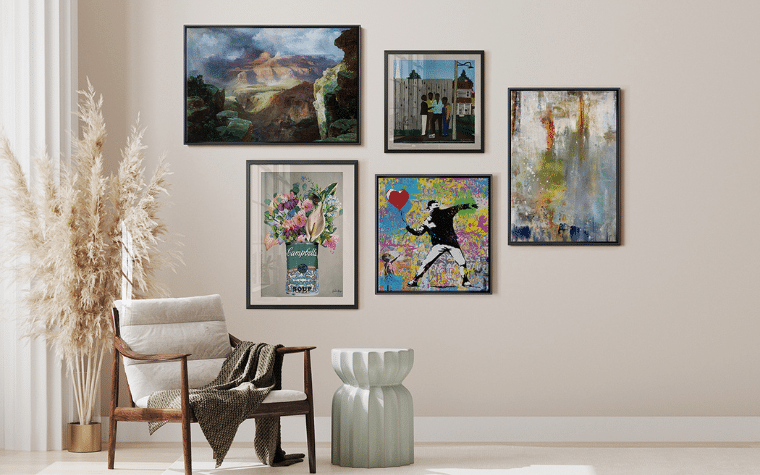
250 Years of American Art: The Movements That Defined a Nation | iCanvas
The major American art movements span 250 years, 10 distinct styles, and one ongoing argument about what this country is and who gets to define it.
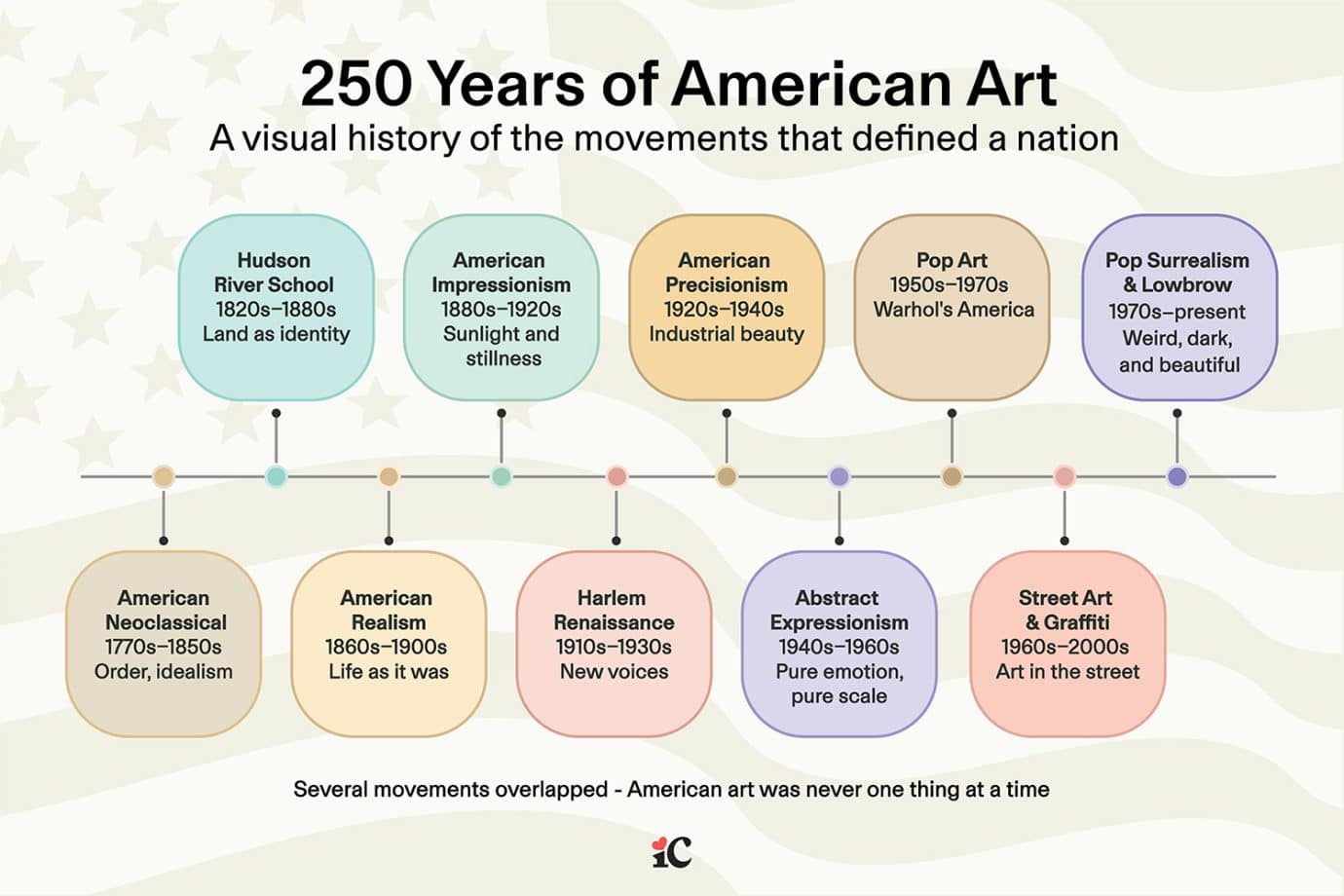
From the Hudson River School’s sweeping wilderness landscapes to the raw energy of Basquiat’s streets, each movement was shaped by the social and political forces of its time and left something on the walls that’s still worth looking at today. This is the full story, told movement by movement.
Table of Contents
TL;DR: 250 Years of American Art
- The Hudson River School didn’t just paint landscapes, they made a political argument about what America was
- The Harlem Renaissance is the most important rupture in American art history that the mainstream canon consistently underplayed
- Abstract Expressionism is the moment American art stopped following Europe and started leading it
- Pop Art and Street Art were doing the same thing from opposite sides of the tracks; Basquiat is the proof
- One movement on this timeline still doesn’t have a closing date
The Foundation Era: Two Answers to the Same Question (1770s–1880s)
American Neoclassicism
Hudson River School
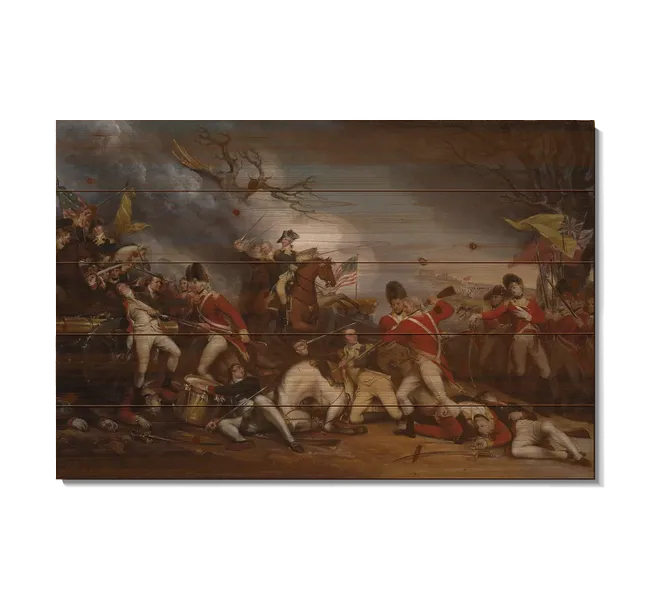
Before America had a signature style, it had borrowed ones. Neoclassicism arrived as a return to the ideals of Greek and Roman antiquity. Painters like John Trumbull and Benjamin West chose their subjects carefully: historical events, founding figures, and heroic scenes from the Revolution.
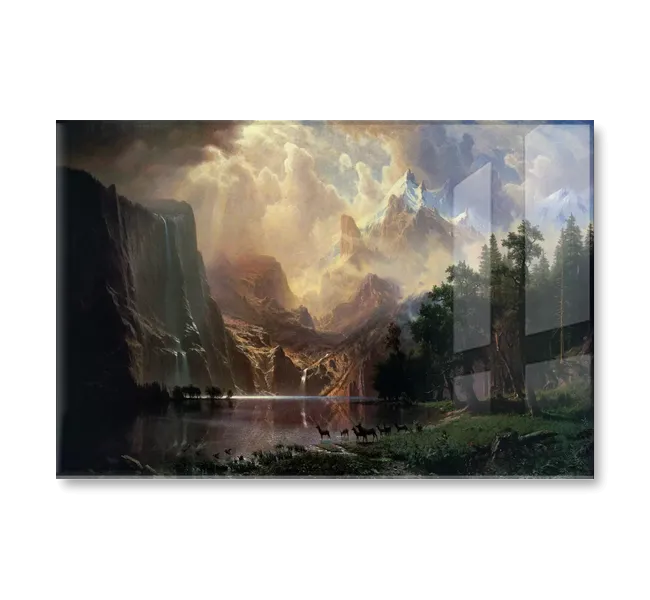
But even as Neoclassicism was making its case for the dignity of the new republic, something else was taking shape. In the early 19th century, painter, poet, and essayist Thomas Cole responded to a growing hunger for a distinctly American art by creating landscape paintings unlike any yet seen: majestic mountains, tangled forests, and dramatic skies.
Cole’s argument was simple and radical: the land was the identity. The two movements overlapped from the 1820s through the 1850s. Neoclassicism looking backward for legitimacy, the Hudson River School looking at the land itself and finding something worth protecting, not just painting. That impulse toward preservation planted the seeds of the American national park system – one of the movement’s most lasting legacies.
Art Meets Reality (1860s–1920s)
American Realism
American Impressionism
Post-Civil War America was a different country. The grand, idealized landscape felt increasingly like a fantasy when so many Americans were living in tenements, working factory floors, and eating in diners that smelled of coffee and cigarettes.
American Realism said: paint what you actually see. Winslow Homer documented the lives of Black Southerners and New England fishermen with an unflinching eye. Thomas Eakins painted surgeons mid-operation and rowers on the Schuylkill River. The subject matter wasn’t heroic and that was exactly the point.
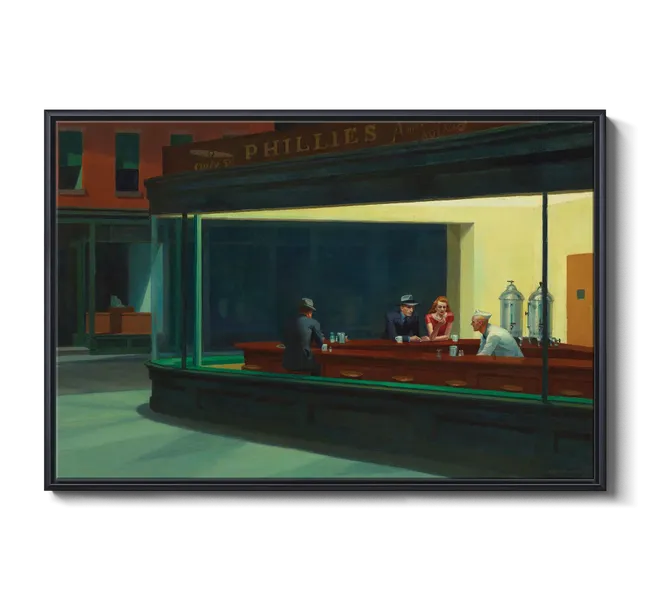
And then there’s Edward Hopper, whose work captures something that doesn’t have a clean name. Nighthawks shows four figures in a late-night diner, sealed inside fluorescent light while the street outside sits dark and empty. It’s not European melancholy. It’s something specific to American space and American distance and if you want to go deeper on what makes it endure, we covered it in full in our Nighthawks post.
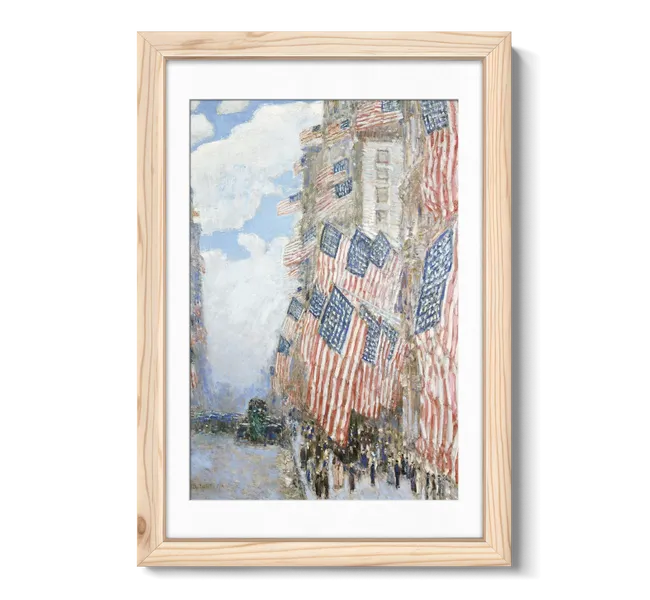
Running alongside Realism, and in direct competition with it through the 1880s–1900s, was American Impressionism. Inspired by Monet, Renoir, and the Paris avant-garde, American painters didn’t just copy the style, they redirected it. Artists like Mary Cassatt, Childe Hassam, and John Henry Twachtman took broken brushwork and soft light and applied it to American subjects: summer afternoons in Connecticut, city streets in New York, and domestic scenes with a warmth and stillness that felt nothing like Paris.
One movement said clarity and truth. The other said light and feeling. Both were competing answers to the same restless postwar moment.
New Voices, New America (1910s–1930s)
Harlem Renaissance
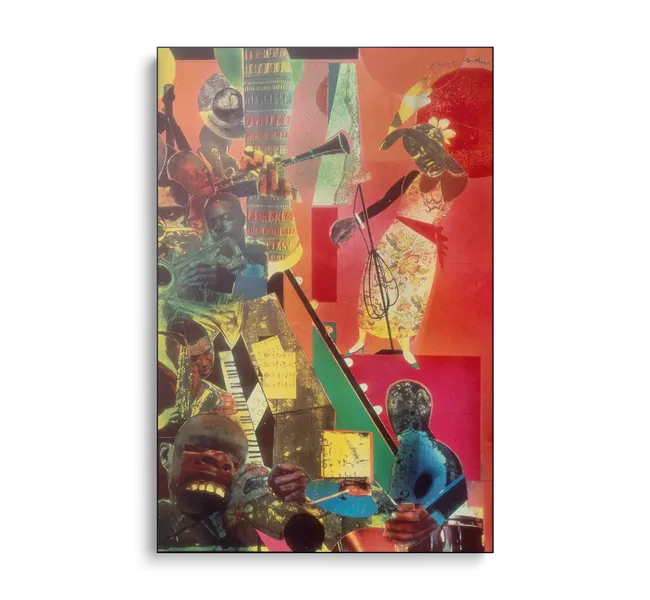
Of all the movements in 250 years of American art, the Harlem Renaissance is the one most consistently underplayed and the one that most deserves its own section.
Fueled by the Great Migration, Harlem became a creative hub unlike anything the country had seen. Black artists weren’t participating in American culture, they were redefining it. The National Gallery of Art recognizes Aaron Douglas as the “father of African American art”. Douglas was a painter who built an entirely new visual language from scratch, fusing African motifs, Art Deco geometry, and bold silhouetted figures into imagery that had no precedent in American art history.
Jacob Lawrence channeled the same energy into narrative. His Migration Series, 60 panels chronicling the journey Black Americans made from South to North, remains one of the most important bodies of work in 20th-century American art. Bold, abstracted, and deeply human, it documented a story that mainstream institutions had largely chosen not to tell.
The Harlem Renaissance wasn’t a regional moment. Langston Hughes, Zora Neale Hurston, Duke Ellington were all part of the same eruption. What happened in Harlem in those two decades didn’t stay in Harlem. It moved into politics, into protest, and into the foundations of the Civil Rights Movement that followed.
The Edges of the Canon (1920s–1940s)
American Precisionism
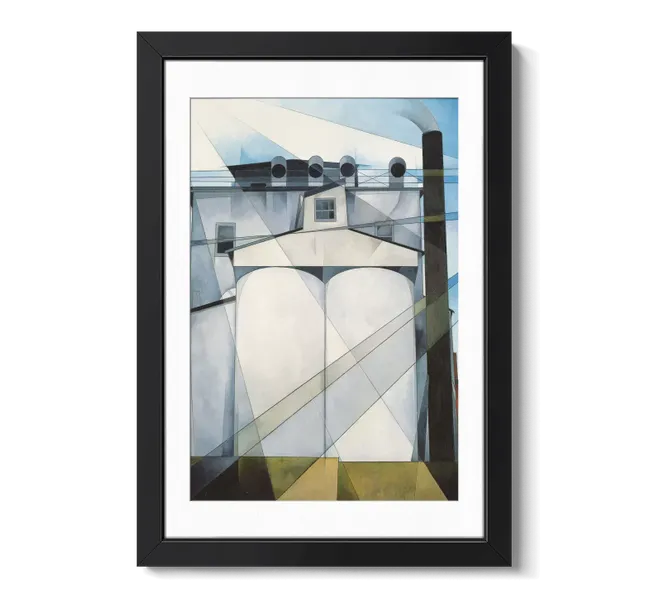
Where Hudson River School painters found the sublime in the wilderness, Precisionist painters like Charles Sheeler and Charles Demuth found it in grain elevator grains, factories, water towers and the geometric precision of industrial America. Sheeler’s American Landscape (1930) finds the same drama in a Ford factory that earlier painters found in the Catskills.
It’s a cool, sharply rendered, almost architectural movement and its surfaces feel remarkably contemporary. Precisionism rewards people who didn’t expect to find industrial machinery beautiful.
America Breaks From Europe (1940s–1960s)
Abstract Expressionism
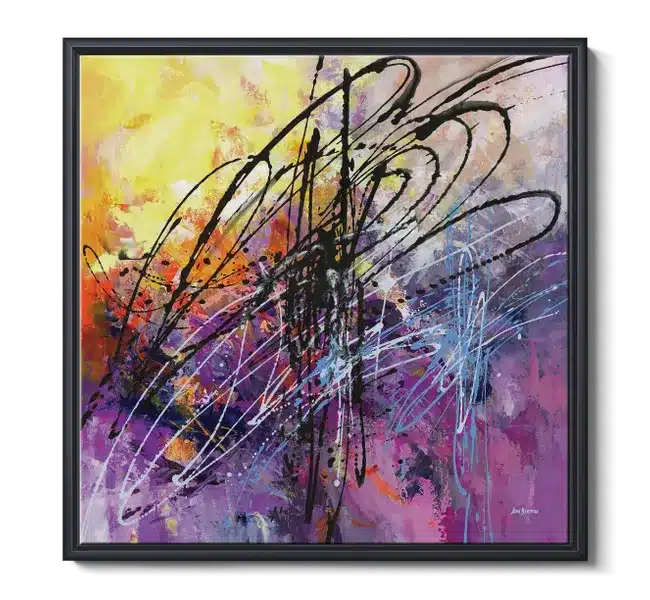
For 150 years, American artists had been in conversation with Europe through borrowing styles, studying abroad, and measuring themselves against Paris. Abstract Expressionism ended that conversation.
After World War II, a group of painters working in New York did something that had never happened before. They shifted the center of the art world from Paris to New York by doing something unique:
- Pollock dripped paint from a can onto canvas spread across the floor.
- Rothko built luminous fields of color that shimmered and seemed to breathe.
- De Kooning dissolved figures into furious, gestural brushwork.
None of it looked like anything that had come before.
The Metropolitan Museum of Art preserves Rothko’s own description of what he was after: “I paint big to be intimate.” These works were vast in scale, meant to be seen up close; so close that the viewer was virtually enveloped by the painting.
That’s the key to understanding Abstract Expressionism, and the reason it still stops people cold today. Stand in front of a Rothko and you don’t observe it. You’re inside it. The scale is the message.
Art Comes Down From the Wall (1950s–2000s)
Pop Art
Street Art & Graffiti
Pop Art arrived in the 1950s and 1960s with a simple, destabilizing idea: that the images saturating everyday American life were just as worthy of the canvas as anything else.
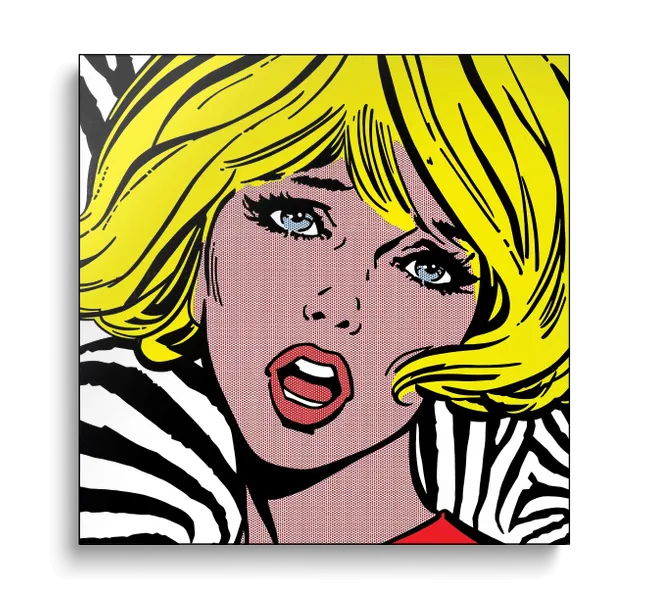
Andy Warhol screenprinted soup cans. Roy Lichtenstein blew comic book panels up to gallery scale. Jasper Johns painted targets and flags until you couldn’t tell if you were looking at art or the thing itself.
As MoMA documents, Warhol’s Campbell’s Soup Cans marked a breakthrough. It was a moment when serial repetition and imagery lifted straight from American commodity culture became fine art. Pop Art collapsed the distance between the gallery and the grocery store in a way that was both brilliant and destabilizing to the art establishment.
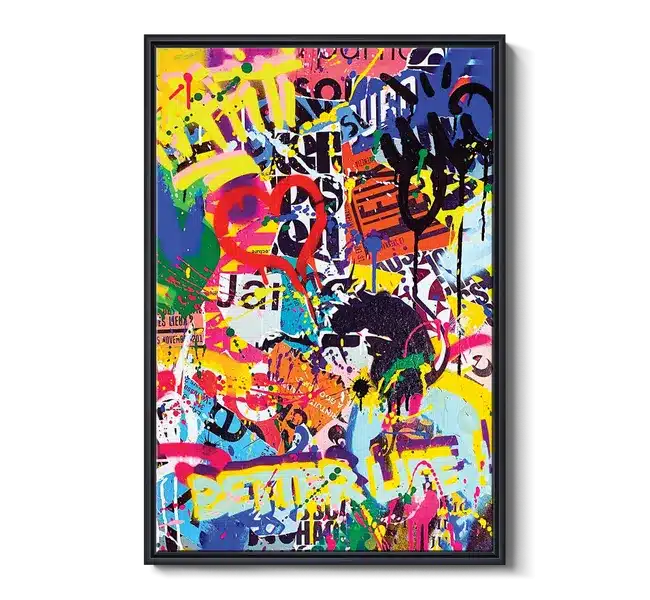
The movement overlapped with Street Art’s emergence in the 1960s and they shared the same democratic impulse even if the venues couldn’t have been more different.
Pop Art was in the galleries. Street Art was in the streets. Jean-Michel Basquiat is the bridge. As the Brooklyn Museum records, he first gained notoriety writing cryptic phrases on Lower Manhattan walls before turning 20, to then selling paintings in SoHo galleries. He rapidly became one of the most accomplished artists of his generation. His symbol-dense paintings are now among the most valuable works produced by any American artist of the 20th century.
Weird, Dark, and Beautiful (1970s–Present)
Pop Surrealism & Lowbrow
If the mainstream art world’s narrative has a blind spot, it’s here.
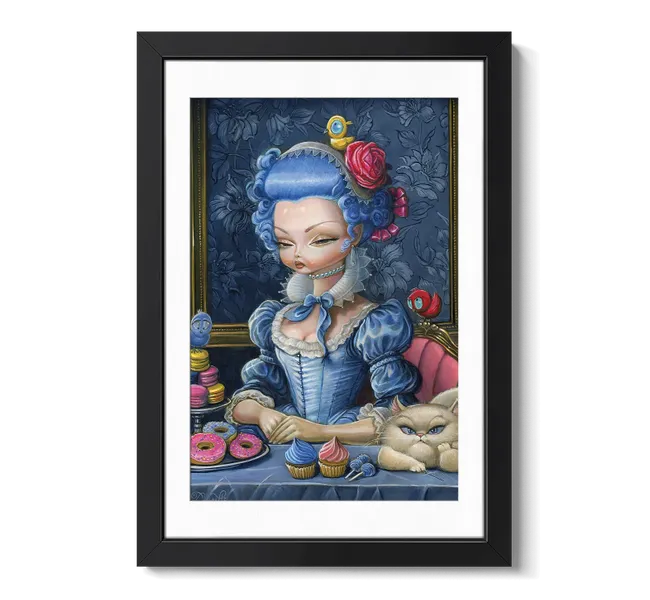
Pop Surrealism, also called Lowbrow, grew out of the underground of Southern California in the 1970s and 1980s, built from the imagery that “serious” art had always dismissed: hot rod culture, tattoo shops, skate decks, and pulp paperback covers.
As The Art Story traces the lineage, that imagery became the raw material for a whole aesthetic universe built entirely outside the gallery system. Robert Williams’s 1979 book, The Lowbrow Art of Robert Williams, helped to name and popularize the movement.
Artists like Mark Ryden, Robert Williams, and Ray Caesar created work that is lush, dark, and completely indifferent to institutional approval. Dreamlike, grotesque, funny, and strange, Pop Surrealism occupies its own category, which is exactly what its practitioners intended. It’s the movement still being written.; the only one on this timeline without a closing date.
250 Years, Still Arguing
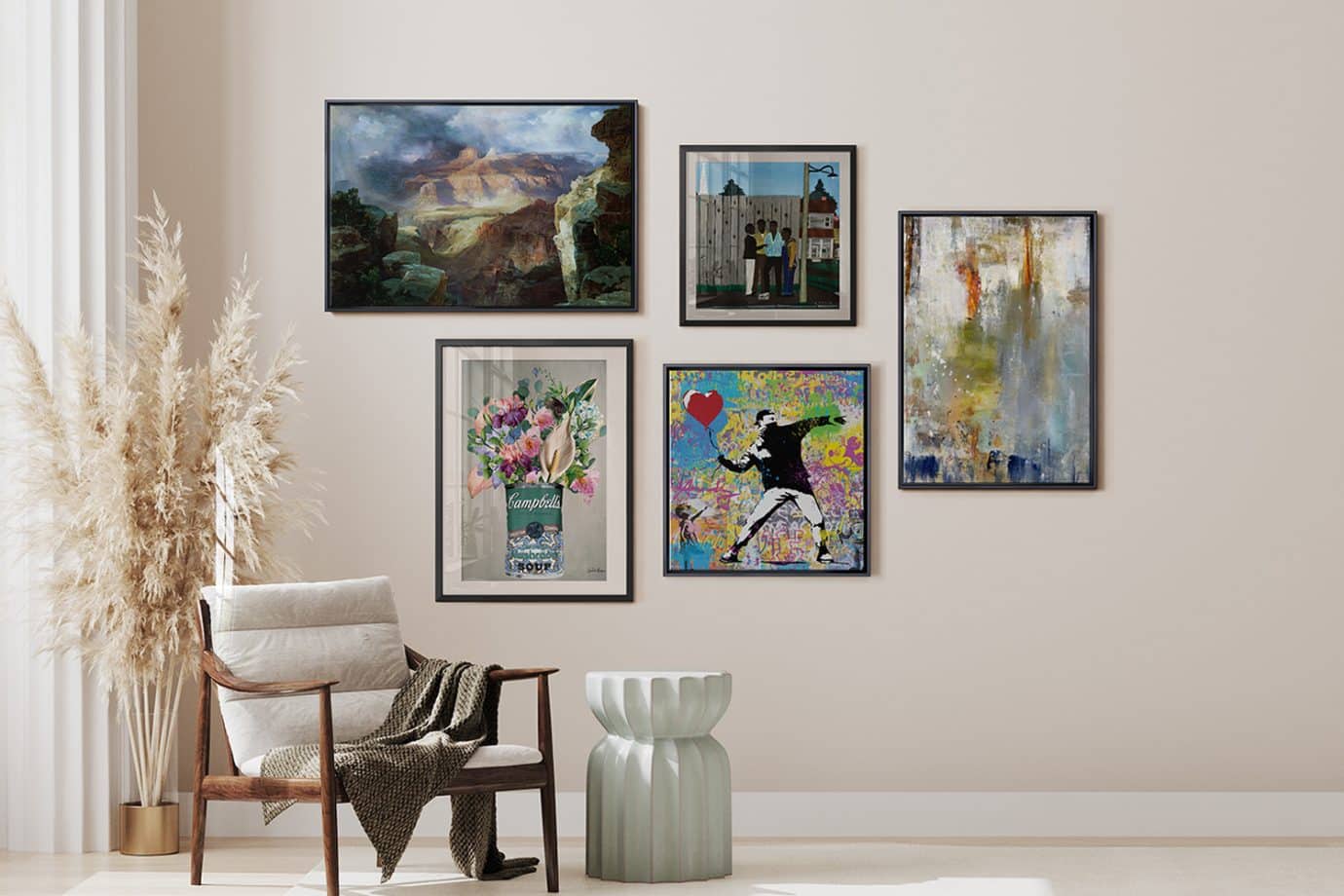
The through-line across all 10 movements is an argument about what America is, who gets to define it, and what’s worth making.
American Neoclassicists argued that the new nation deserved the dignity of antiquity. Hudson River School painters argued that the land itself was the identity. The Harlem Renaissance argued that Black creativity was at the center, not the margins, of American culture. Abstract Expressionists argued that pure emotion, at scale, was enough.
That argument is ongoing. And some version of it is hanging on someone’s wall right now.
FAQ: 250 Years of American Art
▼View the Questions
What are the major American art movements?
The major American art movements include American Neoclassicism, the Hudson River School, American Realism, American Impressionism, the Harlem Renaissance, American Precisionism, Abstract Expressionism, Pop Art, Street Art & Graffiti, and Pop Surrealism & Lowbrow.
What is the most important American art movement?
There’s no single answer but Abstract Expressionism is often cited as the most globally influential, as it shifted the center of the art world from Paris to New York in the postwar decades. The Harlem Renaissance, however, is arguably the most culturally significant for redefining American identity and laying groundwork for the Civil Rights Movement.
How did American art change after World War II?
Abstract Expressionism emerged in New York in the late 1940s and fundamentally changed American art, prioritizing emotional expression over representation and establishing the U.S. as the new center of the global art world for the first time.
What is the difference between American Realism and Impressionism?
American Realism focused on documenting everyday life with clarity and accuracy, often depicting working-class subjects. American Impressionism, which overlapped with Realism in the 1880s–1900s, emphasized light, mood, and the subjective experience of a moment, using loose, broken brushwork borrowed from French Impressionism.
What is Precisionism in American art?
Precisionism was an American art movement active from the 1920s through the 1940s that found beauty in industrial and urban subjects (factories, bridges, grain elevators) rendered with sharp, clean geometric precision. Key artists included Charles Sheeler and Charles Demuth.
What was the Harlem Renaissance in art?
The Harlem Renaissance was a Black cultural movement centered in Harlem, New York, active from roughly the 1910s through the 1930s. In the visual arts, it produced pioneering work by Aaron Douglas, Jacob Lawrence, and others who built a new visual language rooted in African heritage and African American experience.