
Norman Rockwell’s Evolution from Idealist to Social Critic | iCanvas
Picture a Norman Rockwell painting. You probably see a grandmother setting down a golden turkey, a table full of smiling relatives, and maybe a freckled kid getting into trouble. Now picture a six-year-old Black girl in a white dress, walking to school between four faceless U.S. marshals, past a wall marked with a racial slur and a smashed tomato.
Same artist. Twenty years apart.
The usual story says Rockwell started as an idealist and became a social critic. The truer story is more interesting. His values didn’t change nearly as much as his freedom to paint them did. For almost five decades he worked for a magazine that decided which Americans he was allowed to show. When he finally walked away, he painted the country as it actually was. Keep reading to learn all about Norman Rockwell’s evolution.
The Post Years: Painting the American Ideal
Rockwell sold his first cover to The Saturday Evening Post in 1916, when he was 22. According to Biography.com, that sale started a relationship that lasted 47 years and produced more than 320 covers.
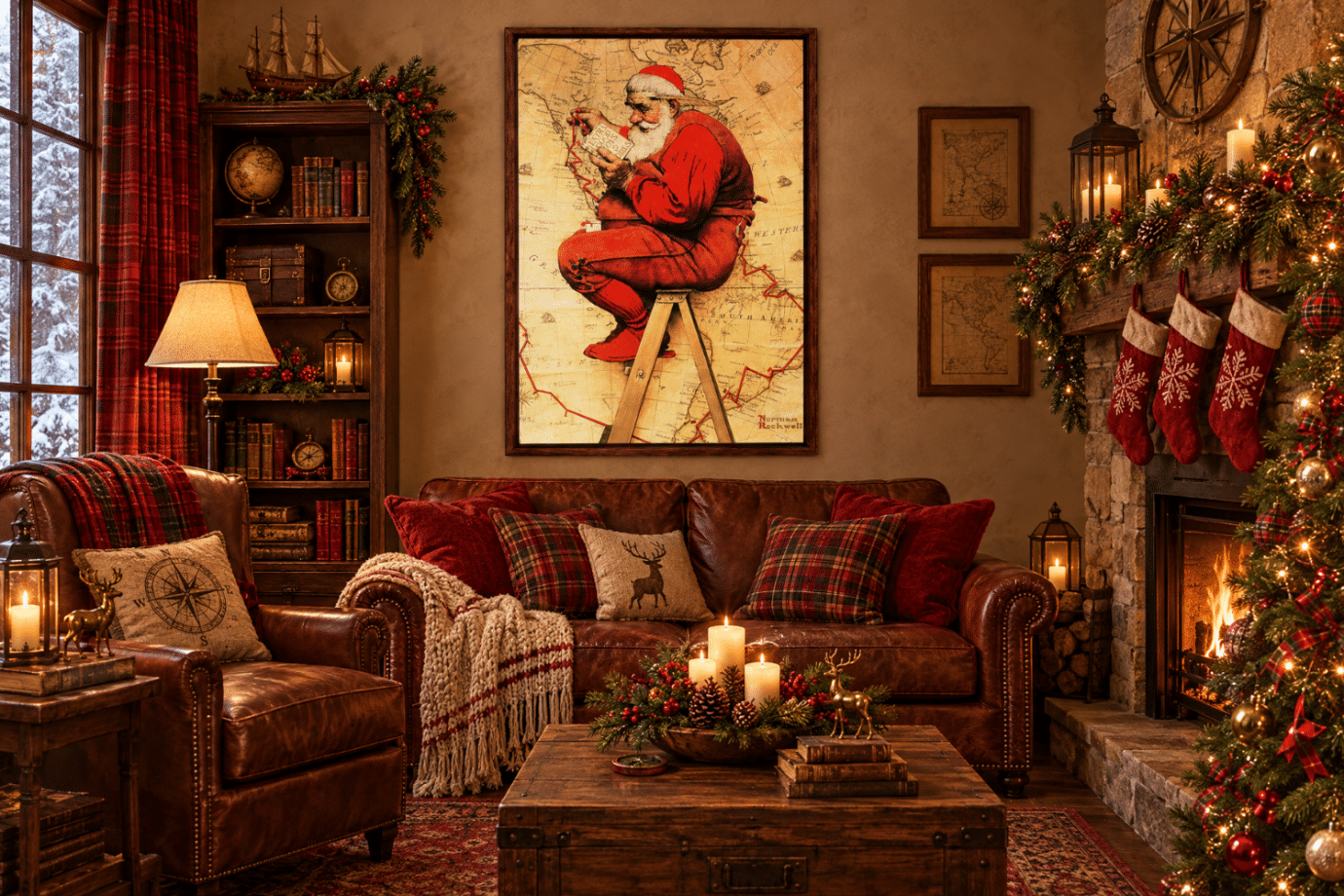
Those covers built a world. Boys skipped out on chores to go swimming. Doctors listened patiently to a little girl’s doll. Santa plotted his Christmas route on a world map with a length of red string in Santa at the Map. The paintings were funny, warm, and packed with tiny details that rewarded a second look.
They were also carefully selective. As Commonweal has pointed out, Rockwell steered clear of the misery of the Great Depression and leaned into homespun domestic comedy, which suited the Post’s conventional outlook. His America was real in its details and idealized in its edges. Nobody went hungry, nobody was angry for long, and almost everyone was white.
The Four Freedoms: When Idealism Became a Mission
In January 1941, President Franklin D. Roosevelt used his State of the Union address to name four freedoms worth defending: freedom of speech, freedom of worship, freedom from want, and freedom from fear. Rockwell, then living in Arlington, Vermont, struggled for months with how to paint ideas that big. He eventually found his answer at a local town meeting, where a neighbor stood up to speak his mind while everyone else listened.
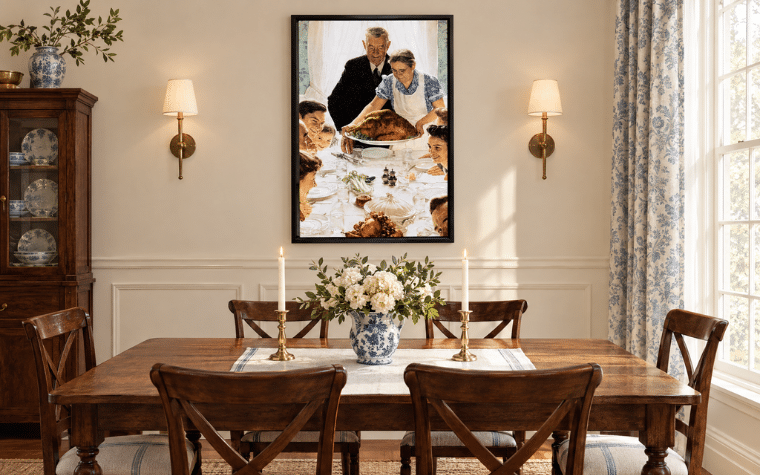
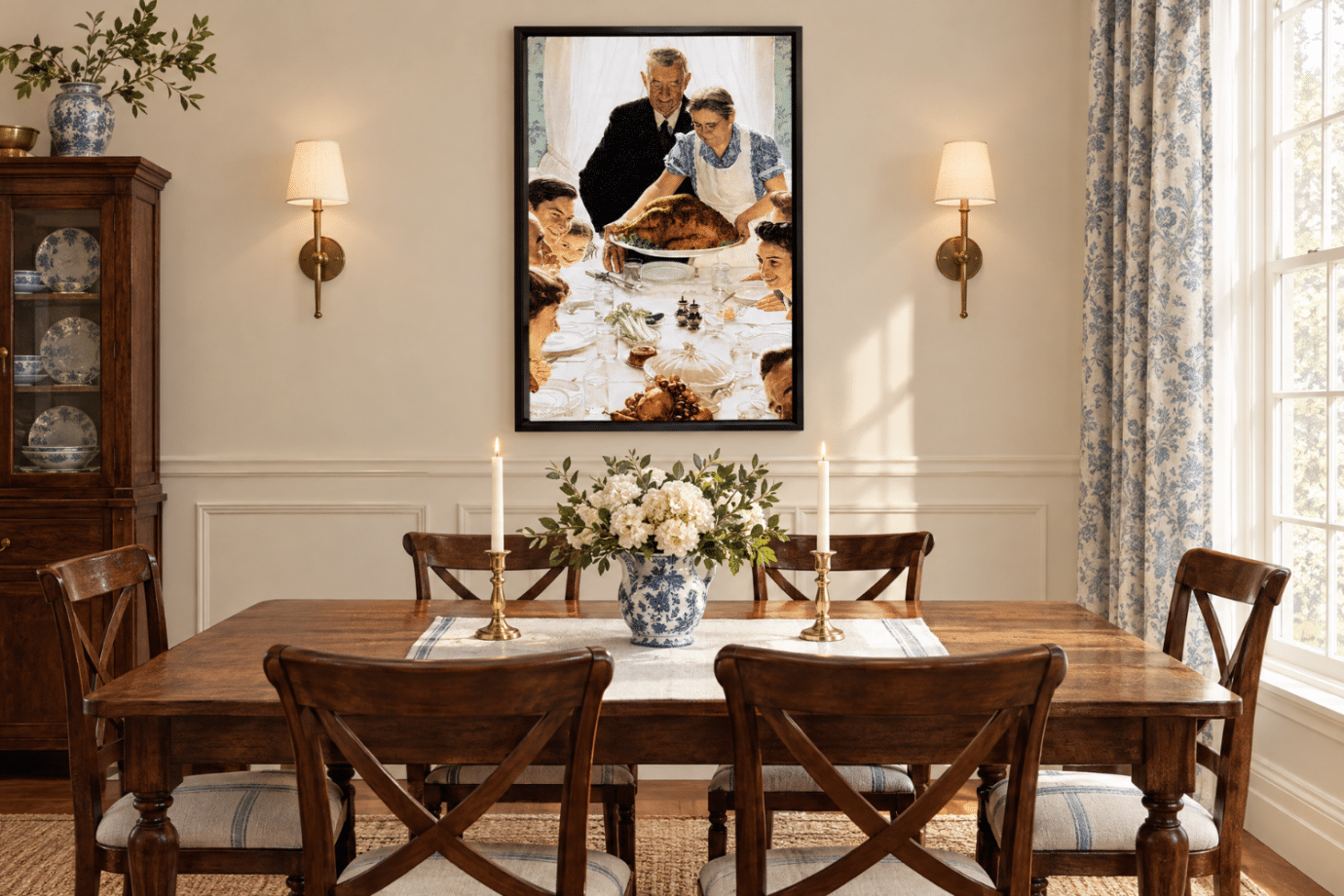
That scene became Freedom of Speech. It was joined by Freedom from Want, the now-famous Thanksgiving table, and Freedom from Fear, where parents tuck their children into bed while a newspaper headline hints at bombings overseas. The Post published all four in early 1943.
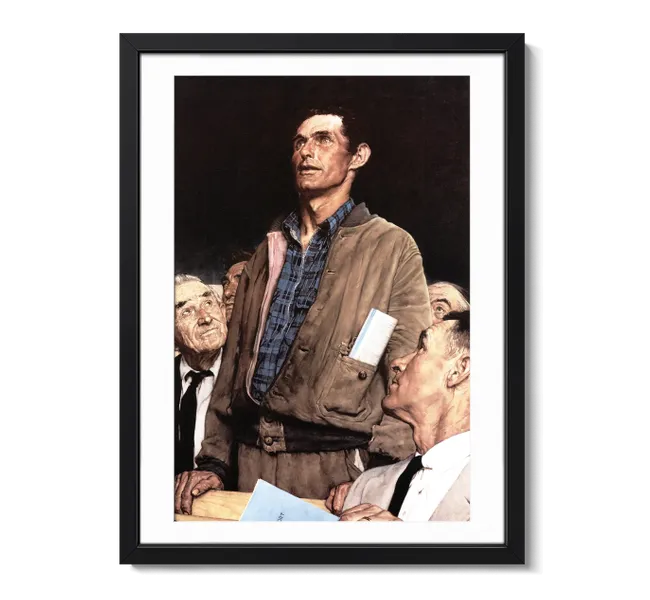
The response was enormous. According to the Norman Rockwell Museum, the original paintings toured sixteen cities, drew more than a million visitors, and helped sell $133 million in war bonds and stamps.
Here is the part that usually gets skipped. The Four Freedoms were political art. Rockwell was already using his brush to make an argument about what America owed its people. The difference was that, in 1943, almost everyone agreed with him.
Postwar Mastery and Quiet Cracks
After the war, Rockwell hit the peak of his craft and his fame. Paintings like Saying Grace and Breaking Home Ties showed a storyteller in total control of every face, gesture, and shaft of light.
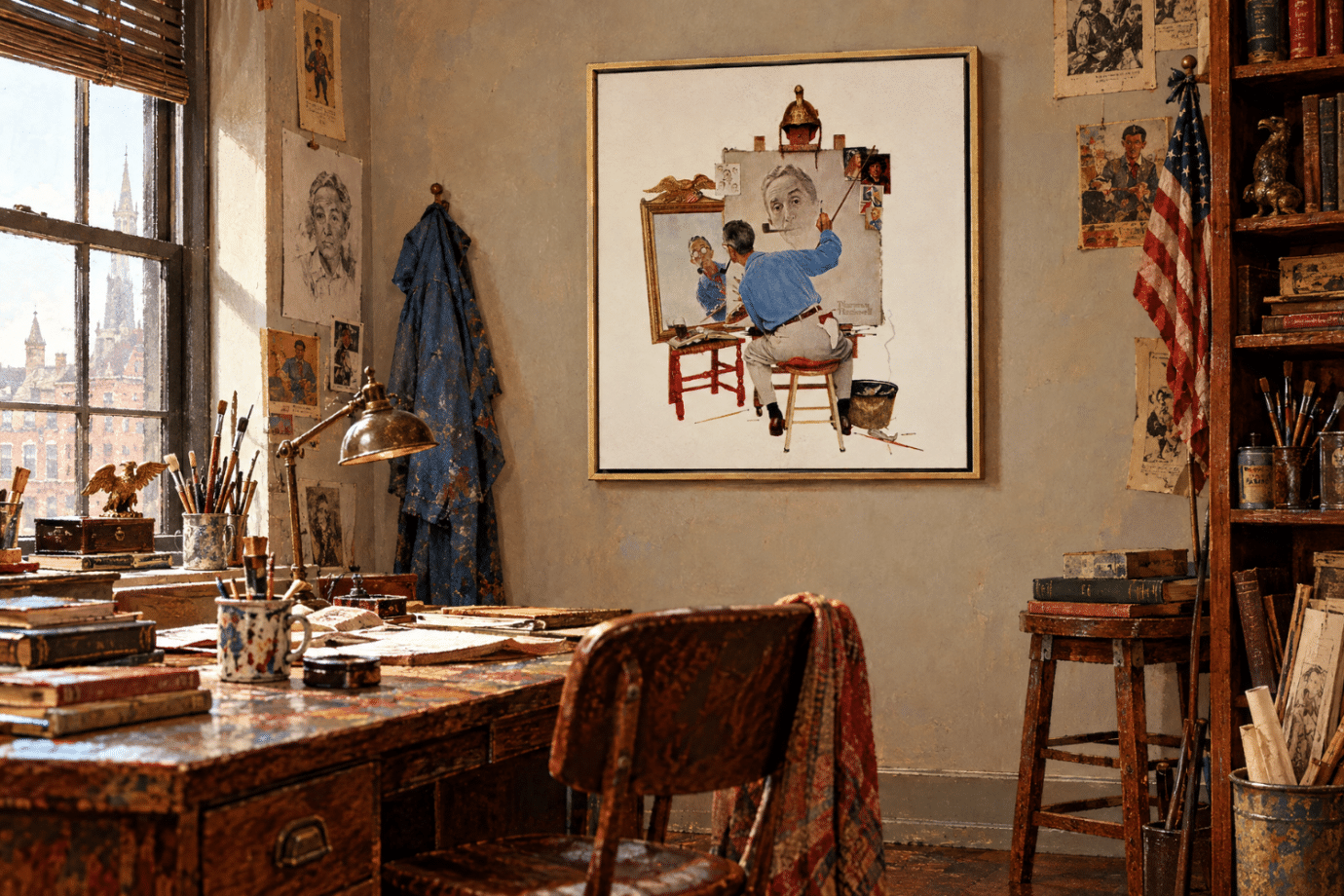
In 1960, he painted Triple Self-Portrait, and it reads like a hint of what was coming. Rockwell sits at his easel, peering into a mirror while painting a flattering, pipe-smoking version of himself. Pinned to the canvas are sketches of self-portraits by Dürer, Rembrandt, Picasso, and Van Gogh. It’s a joke about vanity, but it’s also an artist looking hard at the gap between the image he projects and the person he actually is.
That gap was growing. The Post had firm rules about who could appear in Rockwell’s world. According to The Washington Post, the magazine allowed Black Americans to be shown only in service roles. Rockwell worked inside that limit for decades.
The Turning Point: Golden Rule and Leaving the Post
In 1961, Rockwell pushed against the line. His cover Golden Rule gathers people of many races, religions, and nationalities around a single message: do unto others as you would have them do unto you. Among the faces were Black children, shown with the same dignity as everyone else.
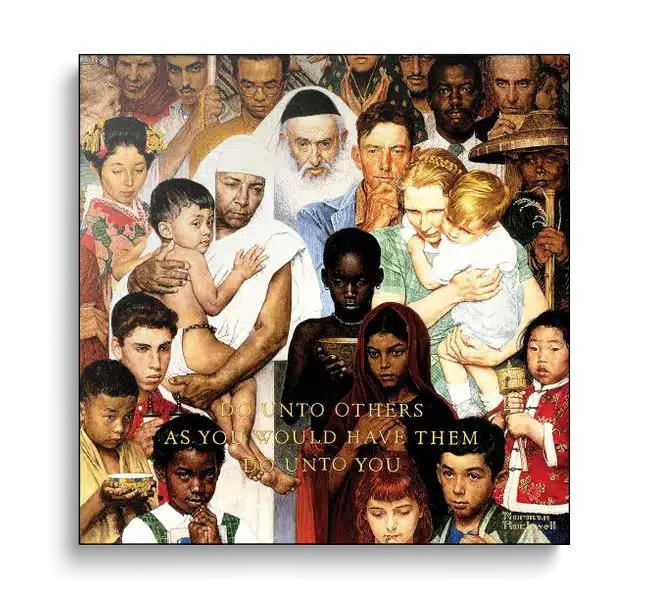
The backlash came quickly. The Washington Post reports that Rockwell received hate mail from segregationists, and that the Post’s editors steered him toward safer work, like portraits of statesmen and celebrities.
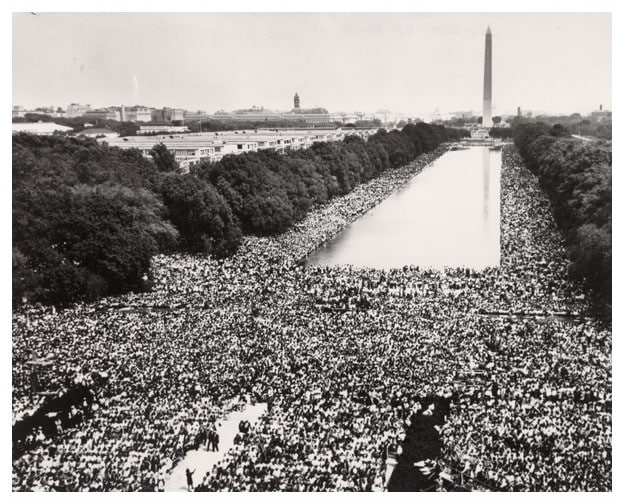
By 1963, the country was changing faster than the magazine was. That August, hundreds of thousands of people marched on Washington for civil rights. That same year, Rockwell told his editors that the work he wanted to make no longer fit what the Post was looking for. After 47 years, he left for Look, a magazine willing to let him tackle the news.
The Look Years: Rockwell as Social Critic
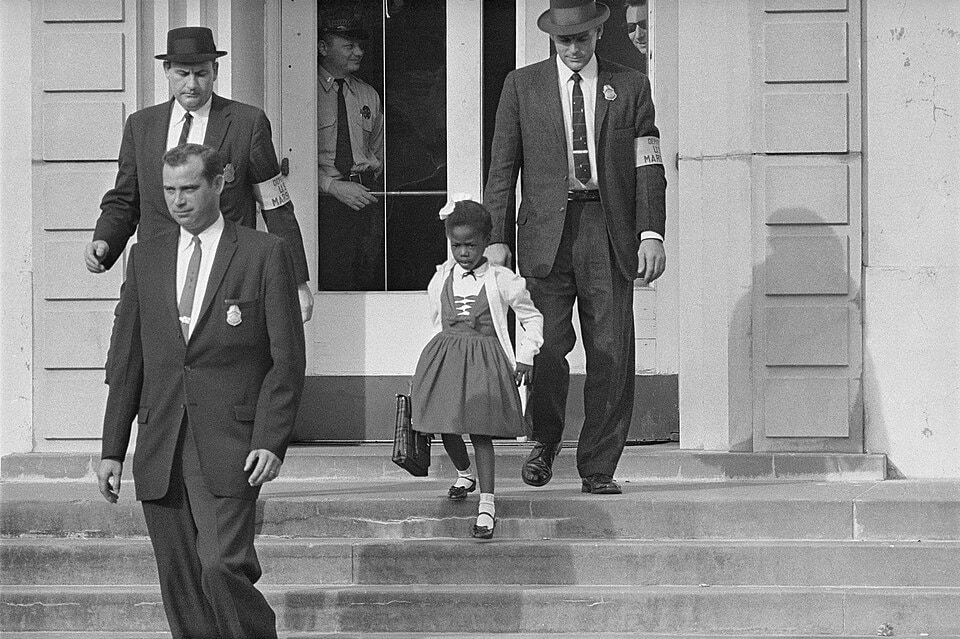
Rockwell’s first major painting for Look ran in January 1964, and it shocked readers who thought they knew him. The Problem We All Live With shows Ruby Bridges on her way to William Frantz Elementary School in New Orleans in 1960, when she became the first Black child to integrate the school.
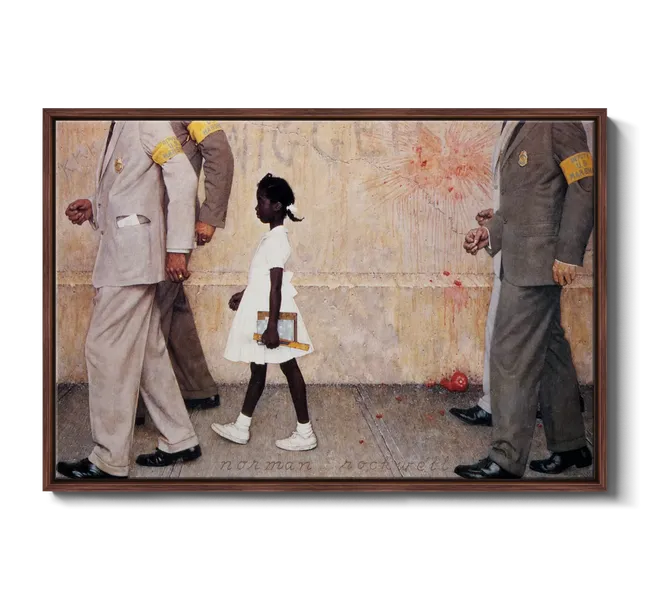
Look closely at how it’s built. The marshals are cropped at the shoulders, so they become a wall of authority rather than individuals. Ruby is the only complete figure, small and upright, holding her school supplies. The wall behind her carries a slur, the letters “KKK,” and the burst of a thrown tomato. Rockwell doesn’t show the crowd at all. The viewer stands where the crowd would be.
The Norman Rockwell Museum notes that readers responded with everything from praise to accusations of hypocrisy to outright segregationist rage. Rockwell kept going.
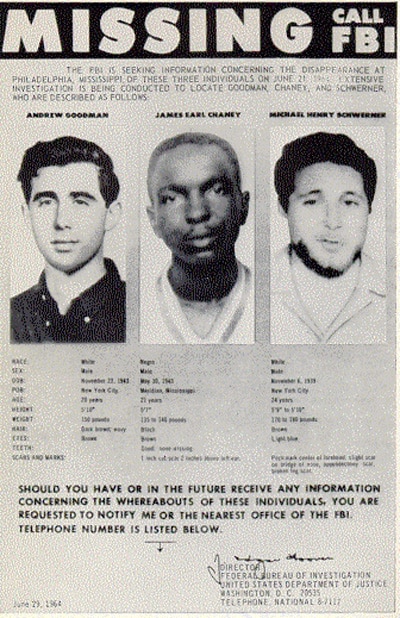
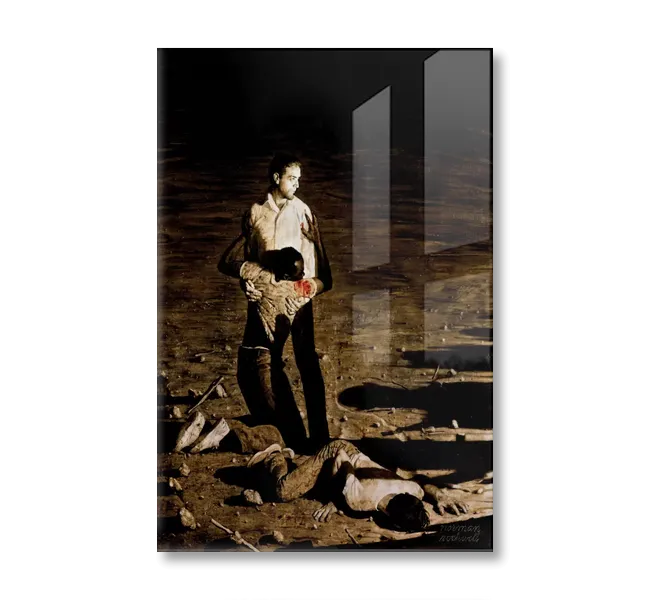
In 1965, he painted the murders of civil rights workers James Chaney, Andrew Goodman, and Michael Schwerner in Philadelphia, Mississippi. The finished work, known as Murder in Mississippi and available on iCanvas as Southern Justice, drops the warmth almost entirely. It’s raw, stark, and stripped down in a way his Post covers never were.
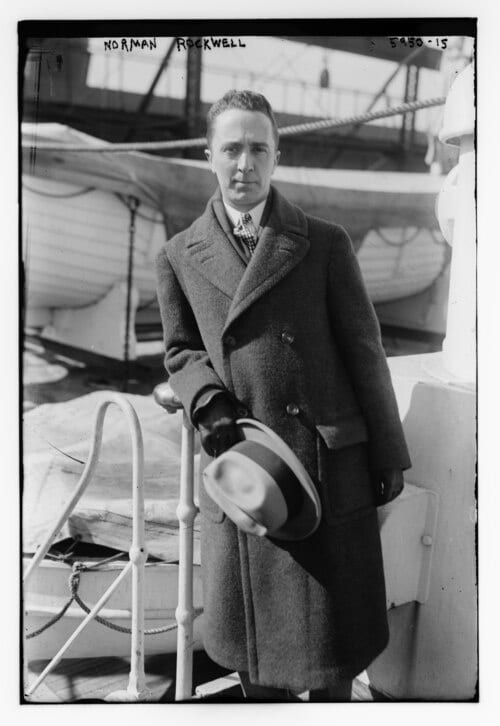
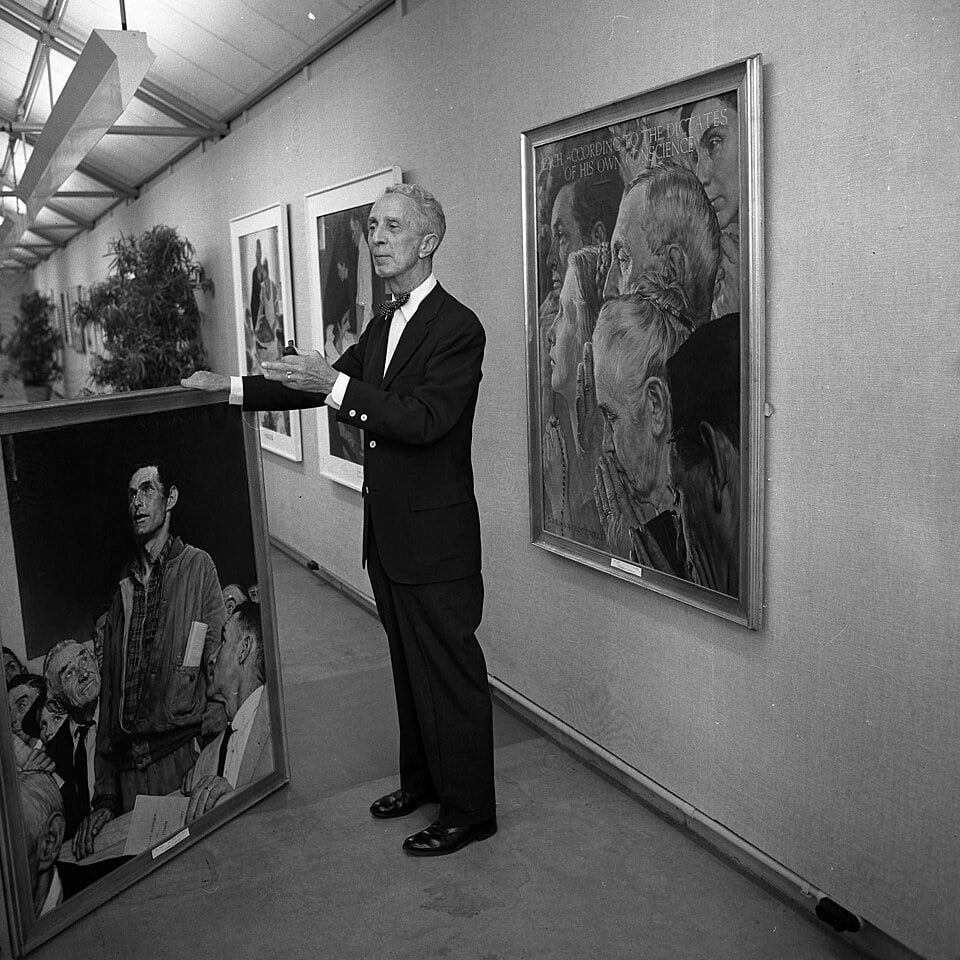
That same year, the Los Angeles Times ran a photo of Rockwell at a Los Angeles exhibition of his work, captioned with the claim that he paints “Americana.” The label hadn’t caught up with the artist.
He kept widening his scope. In 1967, he painted a Black family moving into a white suburb, watched by curious children on both sides. He covered the Peace Corps, the space program, and in The Right to Know, a crowd of ordinary Americans demanding honesty from their government. When an approving reader wrote to him about the change, Rockwell replied that he was “trying to be a bit more adult in my work.”
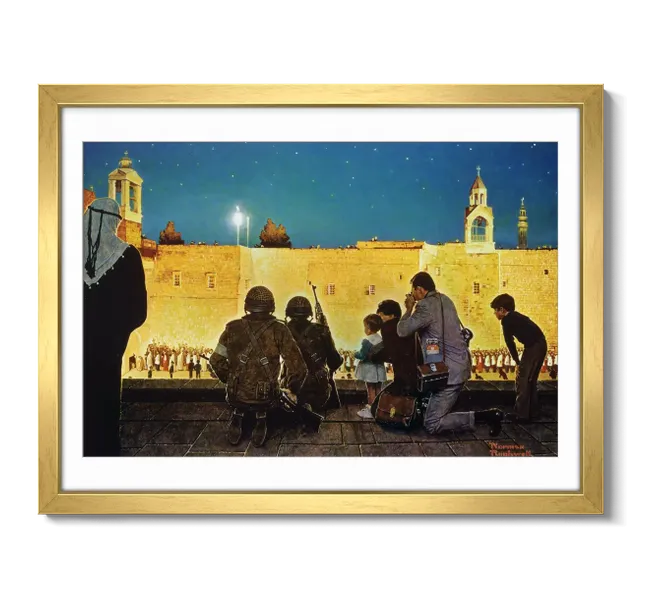
Even his Christmas paintings changed. In 1970, he painted Uneasy Christmas in the Birthplace of Peace, a nighttime scene of Bethlehem watched over by armed soldiers. According to the Norman Rockwell Museum, Look’s art director pushed him to cut some of the figures, and Rockwell kept the soldiers in. Thirty years after Santa at the Map, the same artist was painting a Christmas that felt far less certain.
Legacy: Why Both Rockwells Matter
In 2011, The Problem We All Live With was loaned to the White House to mark 50 years since Ruby Bridges walked into her school. According to the Obama White House archives, it hung outside the Oval Office from June to October. When Bridges visited, President Obama told her that his own path to the presidency ran through the courage of her generation.
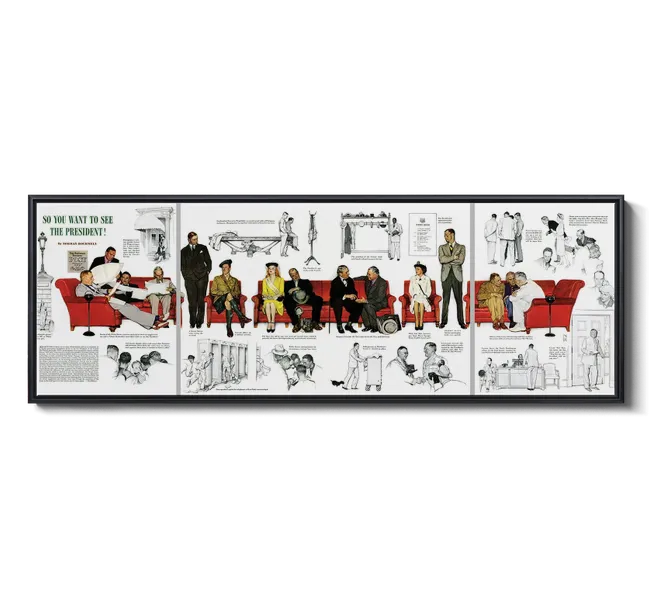
The Norman Rockwell Museum notes that the painting hung beside another Rockwell, So You Want to See the President from 1943. One painting showed the waiting room of American power. The other showed who had been left waiting outside.
Rockwell lived long enough to be honored for both sides of his career. In January 1977, President Gerald Ford awarded him the Presidential Medal of Freedom. Rockwell didn’t attend the ceremony, so his son Jarvis accepted for him. The citation praised his portrayal of the American scene with “unrivaled freshness and clarity.” He died the following year in Stockbridge, Massachusetts.
It’s tempting to split Rockwell into two artists, the cozy one and the serious one. That misses the point. The idealist and the critic were the same man, painting the same country from two angles. The Thanksgiving table showed what America promised. Ruby Bridges showed who was still being kept from it. You need both paintings to see the whole picture, and Rockwell seemed to know that better than anyone.
Bring Rockwell Home
Rockwell’s work still lands because it asks you to look closely, whether you’re laughing at a runaway kid at a lunch counter or sitting with the weight of a little girl’s walk to school. Hang the warm, funny Rockwell in a dining room or den, or choose a piece from his Look years for a space where you want art that starts conversations.