

Monet’s Water Lilies Almost Didn’t Happen | iCanvas
Monet’s Water Lilies are probably the most recognizable paintings in the world. Over 250 of them exist across museums, collections, and gallery walls; soft blues, greens, and pinks floating on still water. They’re the kind of art people hang when they want a room to feel a little more calm, quiet, and serene.
The story behind them is the opposite.

Table of Contents
TL;DR: The Real Story Behind Monet’s Water Lilies
Monet’s neighbors tried to block the pond from being built. He diverted a river and hired eight gardeners to maintain it. He destroyed hundreds of his own paintings – slashing, burning, and stomping canvases in fits of frustration. Then cataracts slowly stole his vision, accidentally pushing his work toward abstraction. He nearly pulled out of donating the paintings to France, and died before the installation opened. The calmest paintings in art history were made in total chaos.
2026 marks 100 years since Monet died, and as exhibitions open from Paris to Tokyo to Normandy, it’s a good moment to revisit the real story.
The Pond That Almost Wasn’t
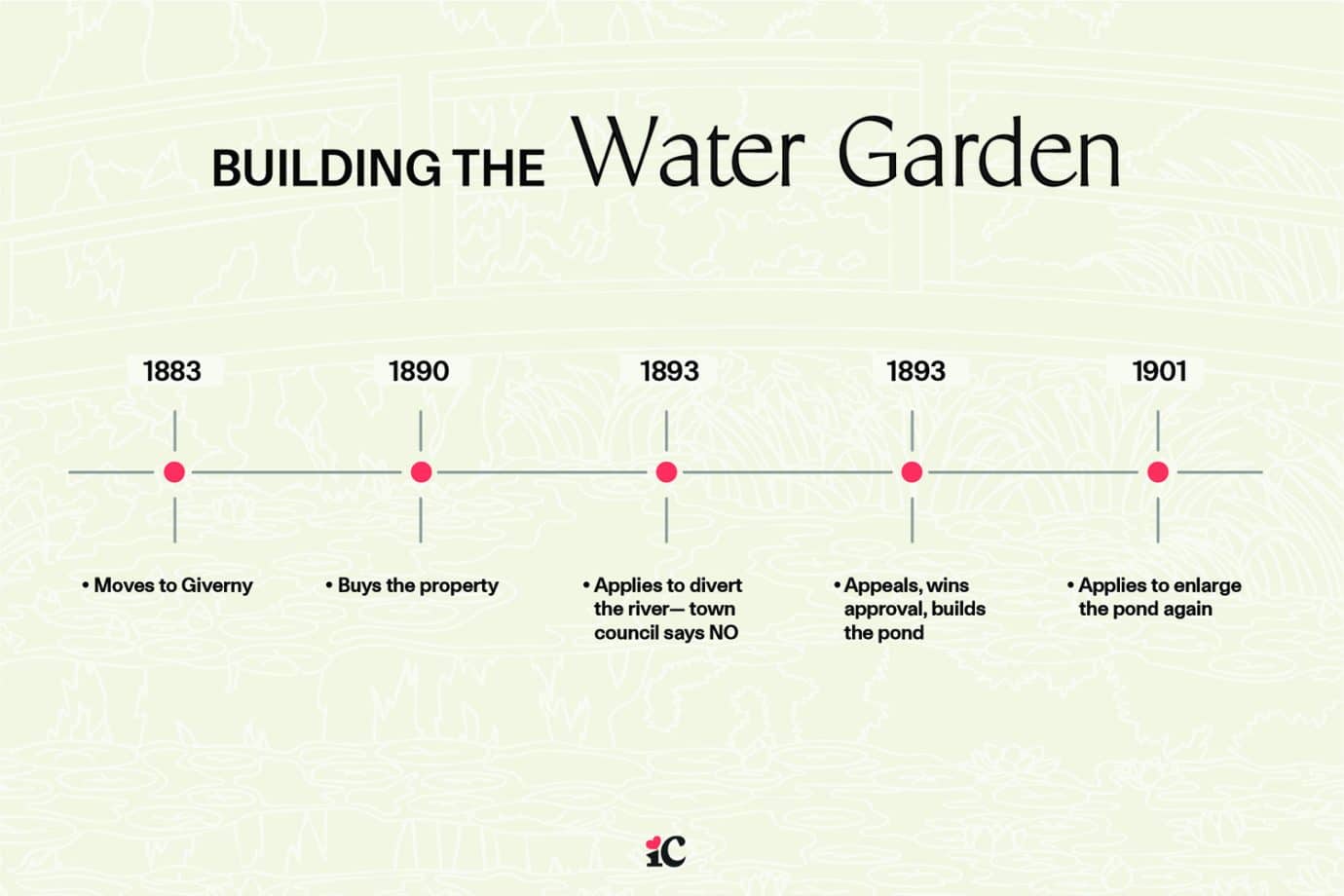
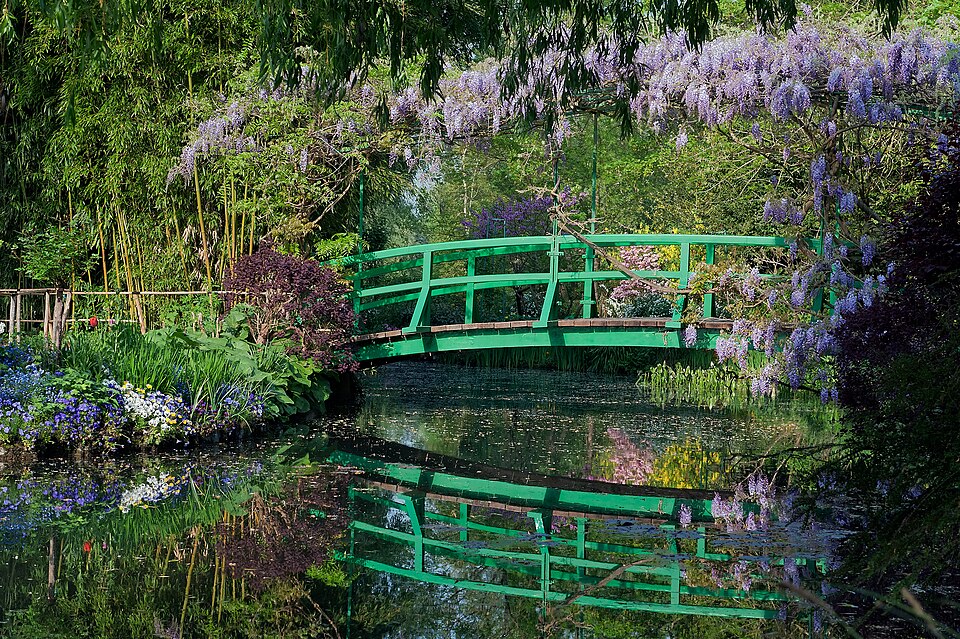
Monet moved to Giverny in 1883 and bought the property in 1890. But the house wasn’t enough. In February 1893, he purchased a plot of neighboring land with a plan to build a water garden: a private landscape he could paint from, and one he would design himself.
But there was a problem. To fill the pond, he needed to divert water from the Ru, a branch of the River Epte that ran through the area. In March 1893, he applied to the Prefect of Eure for permission. The town council said no.
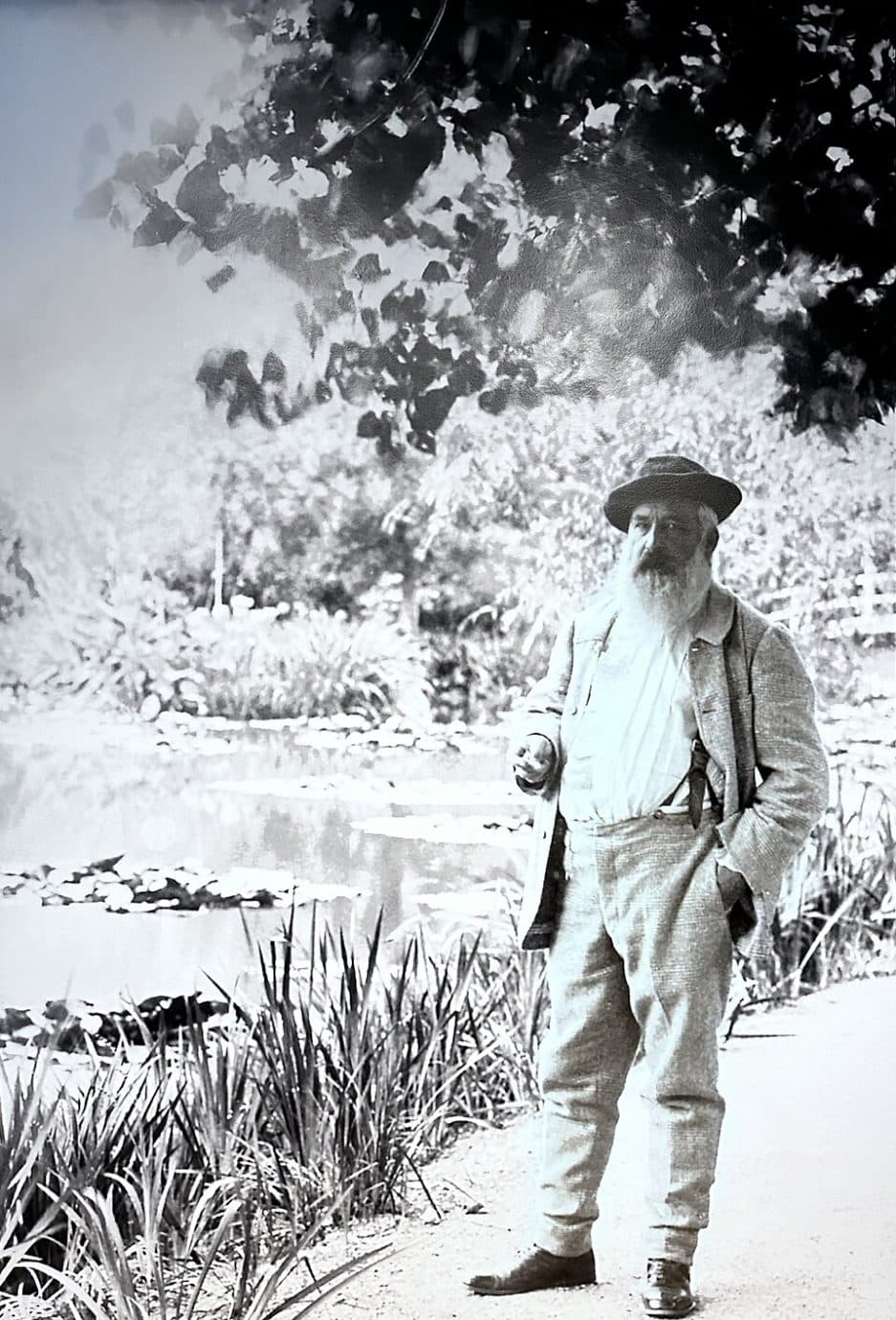
His neighbors, mostly farmers, were furious. They believed Monet’s exotic imported plants would poison the local water supply and kill their cattle. Monet didn’t handle it gracefully. He fired off a letter calling them unreasonable, then appealed the decision, arguing the garden was “for the pleasure of the eye and for motifs to paint.” He signed it Claude Monet / artist painter. The Prefect approved his application on July 27, 1893, and the Japanese-style bridge was built by October, over continued protests.
Eight years later, he went back for more. In 1901, Monet applied to enlarge the pond again, kicking off another round of bureaucratic back-and-forth with multiple government agencies. He got his way. Again.
What he built wasn’t just a pond. He hired up to eight full-time gardeners, one of whom was specifically assigned to clean the water’s surface and dust the lily pads from a small boat. He ordered exotic hybrid water lilies from the Latour-Marliac nursery. He even paid to have the nearby dirt road paved so dust wouldn’t settle on his plants. The garden at Giverny wasn’t a place Monet happened to paint. It was a landscape he engineered – arguably the only great artist in history to build his subject from scratch.
The Painter Who Destroyed His Own Paintings

By 1899, Monet had started painting the water lilies in earnest. By the early 1900s, they consumed him. He described the obsession himself in a 1908 letter to a friend: “These landscapes of water and reflections have become an obsession.”
The problem wasn’t lack of productivity, it was that almost nothing met his standard. His wife Alice described the cycle in a letter to her daughter on April 12, 1908:
“He punctures canvases every day. It is truly distressing. One day, things are not too bad; the next day all is lost.”
Alice Monet, 1908
A month later, Monet attacked and destroyed at least 15 major water lily canvases with a knife and paintbrush. A newspaper at the time reported the damage at $100,000, over $3.4 million in today’s dollars, though the actual market value of 15 Monet water lilies would now be almost incalculable. A Paris exhibition at the Durand-Ruel gallery, originally planned for 1907, had to be postponed all the way to May 1909 because he kept destroying the work meant for it.

Sotheby’s estimates Monet may have destroyed as many as 500 canvases over his lifetime; burned, slashed with a knife, stomped with his boots in the garden. The painter Lilla Cabot Perry once reported witnessing him burn 30 canvases in a single episode.
Georges Clemenceau, Monet’s closest friend and eventual Prime Minister of France, described it after the artist’s death: Monet would attack his canvases when he was angry, and his anger came from a dissatisfaction with his own work that never went away. Monet put it more bluntly:
“My life has been nothing but a failure, and all that’s left for me to do is to destroy my paintings before I disappear.”
Claude Monet
Going Blind and Accidentally Inventing Something New

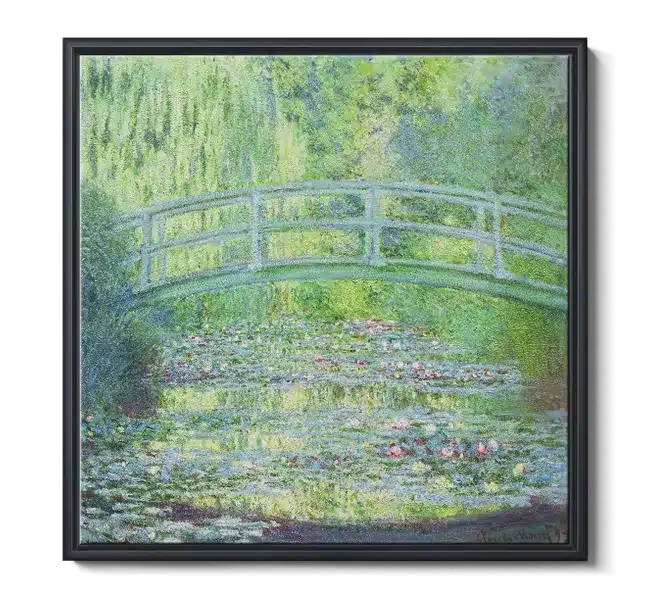
Around 1907, Monet started losing his vision. By 1912, he was diagnosed with bilateral cataracts, a progressive clouding of the lens that acts like a yellow-brown filter over everything you see. Blues and greens fade. Reds and yellows dominate. Monet described colors as no longer having “the same intensity,” and reds as looking “muddy.”
He adapted. He labeled his paint tubes to keep track of colors by position, kept a strict palette order, wore a wide-brimmed hat to cut glare, and avoided painting in midday sun. But his late paintings, especially the Japanese Bridge series from the early 1920s, tell the story his workarounds couldn’t fully solve. The cool blues and greens of his earlier work gave way to hot reds, oranges, and muddy browns. Brushstrokes became broader and thicker. Forms dissolved. These weren’t intentional stylistic choices. He was painting what he saw.
Before Cataracts
After Cataracts
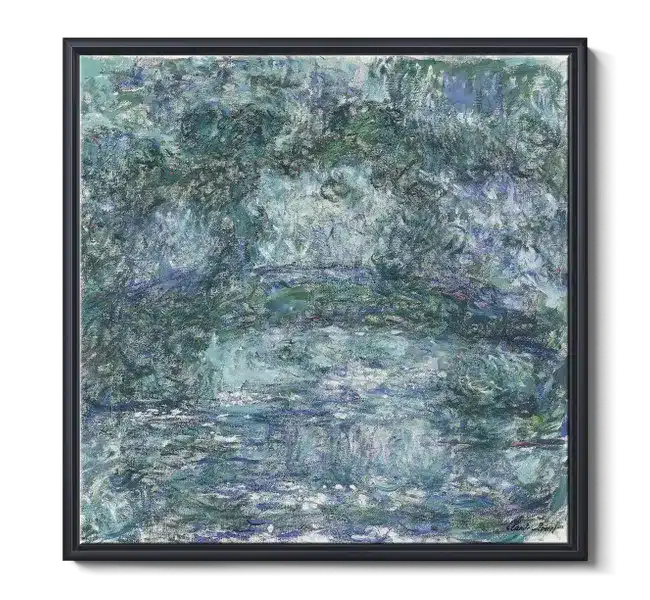
By September 1922, Dr. Charles Coutela recorded his visual acuity at light perception only in the right eye and roughly 10% vision in the left. Monet was legally blind.
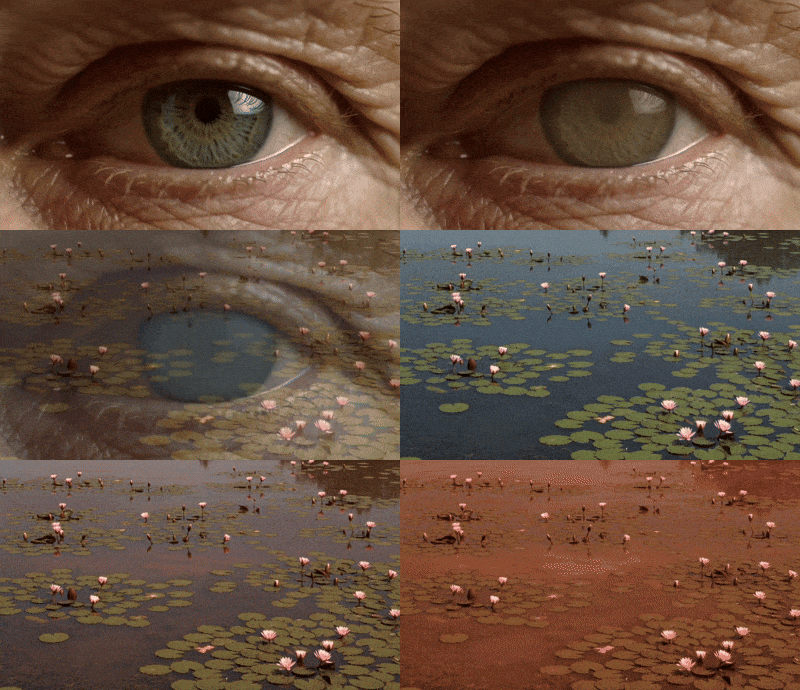
He refused surgery for over a decade. He’d watched fellow artists Honoré Daumier and Mary Cassatt lose their ability to paint after cataract operations. He preferred, as he put it, to make the most of his poor sight rather than risk losing what little he had left. Clemenceau, who was also trained as a physician, finally convinced him. Surgery came in January 1923. Monet was, by all accounts, a nightmare patient. He argued with doctors, tore at his bandages, and later wrote to his surgeon calling the operation “criminal.”
Post-surgery, his palette snapped back to blues and greens almost immediately. He destroyed many of the warm-toned cataract-era paintings. But the ones that survived are now seen as a bridge between Impressionism and Abstract Expressionism – the accidental products of a disease that pushed one of the most deliberate painters in history into territory he never would have explored on purpose. Some researchers even speculate that after surgery, with his natural lens removed, Monet could perceive ultraviolet light, seeing colors closer to what a bee sees than what a human typically does.
A Gift to France That Almost Never Arrived
In 1914, Monet’s son Jean died at age 46. Monet was devastated, so depressed he couldn’t paint for months. Clemenceau pushed him to start working again, encouraging him to take on a monumental project: enormous Water Lily panels designed to envelop the viewer from every side. Monet had a massive new studio built at Giverny – 23 by 12 meters, with skylights and custom easel trolleys to handle canvases of this scale.
On November 12, 1918, the day after the Armistice ended World War I, Monet wrote to Clemenceau offering the paintings to France. He called it “the only way I have of taking part in the Victory.” Clemenceau persuaded him to expand from two panels to the full decorative series. The formal donation contract was signed on April 12, 1922, earmarking the work for the Orangerie des Tuileries.
Then Monet nearly pulled out. He kept reworking and destroying panels. Clemenceau threatened to end their friendship if Monet abandoned the project. The two went back and forth for years – Clemenceau cajoling, Monet retreating, the paintings inching toward completion and then getting reworked all over again.
Monet died on December 5, 1926. He never saw the finished installation. At the funeral, Clemenceau removed the black cloth draped over the coffin and replaced it with a flowered fabric.

“No black for Monet!”
Georges Clemenceau, at Monet’s funeral, 1926
The Orangerie opened on May 17, 1927 – eight panels across two oval rooms, exactly as Monet designed them, each panel two meters tall, with a combined length of roughly 100 meters. Almost nobody came. Clemenceau noted in 1928 that on one visit, only 46 people showed up all day, and 44 of them were couples looking for a quiet place to be alone. Critics dismissed the paintings as outdated and decorative.
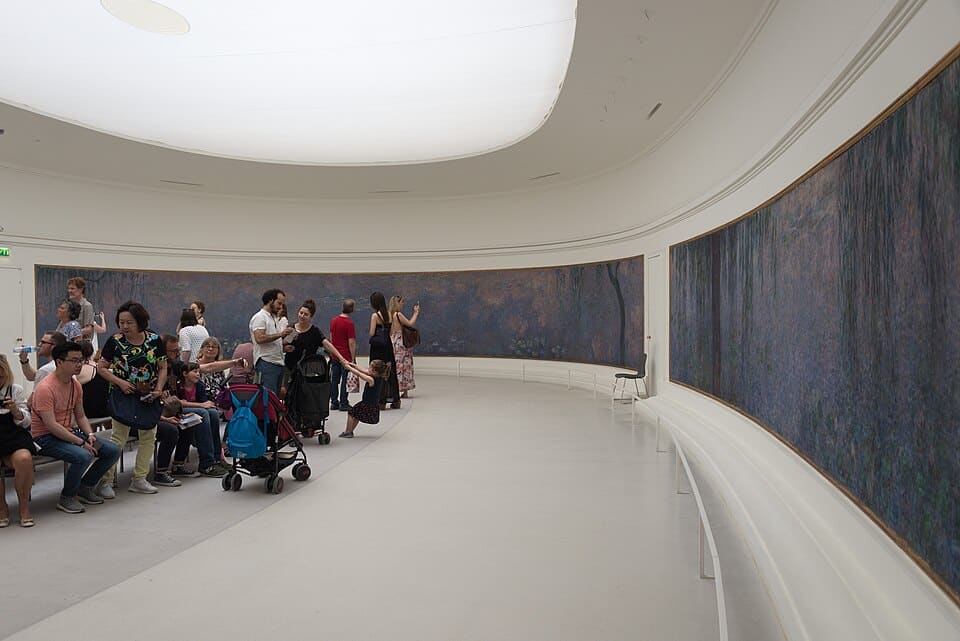
It took three decades. In the 1950s, when Abstract Expressionism made the art world look at dissolved forms and immersive scale with new eyes, Monet’s late Water Lilies were finally recognized for what they were – a turning point in modern art, painted by a man who was going blind and knew it.
Where to See Monet in 2026
2026 marks the centennial of Monet’s death, and exhibitions are running worldwide throughout the year:
- Paris: Musée de l’Orangerie is hosting “Monet and Time” from September 2026 through March 2027. The Marmottan Monet is running “Histories of Landscapes from Monet to Hockney.”
- Giverny & Normandy: The Normandy Impressionist Festival runs May through September 2026, themed around Monet’s garden, with roughly 60 contemporary art projects across the region. The Musée des Impressionnismes in Giverny is showing “Before the Water Lilies.” A tribute at Monet’s grave is planned for December 5.
- Tokyo: Artizon Museum presented “Claude Monet: Questioning Nature” from February through May 2026, in partnership with the Musée d’Orsay.
- Hakone, Japan: The Pola Museum of Art is running a centennial exhibition from June 2026 through April 2027.
And Giverny itself is open April through November, the water garden Monet fought to build. The one his neighbors tried to stop, the one he diverted a river to fill, the one he hired eight gardeners to maintain, is still there, still blooming, still maintained by a dedicated team carrying on what he started over 130 years ago.
Bring the Story Home
Part of what makes Monet’s Water Lilies resonate isn’t just how they look, it’s knowing what it took to make them. The obsession, the struggle with his own eyesight, the decades of reworking, the fact that he nearly destroyed them all. When you hang a Water Lilies print on your wall, you’re not just putting up a pretty painting. You’re living with a piece of one man’s relentless, chaotic, deeply human fight to capture something he could feel but never quite pin down.

FAQ: Claude Monet’s Water Lilies
▼View the Questions
Why did Monet’s neighbors try to stop the water lily pond?
They feared his exotic imported plants — particularly the hybrid water lilies ordered from a specialist nursery — would poison the local water supply and kill their livestock. The town council initially denied his application to divert water from the nearby river.
How many Water Lily paintings did Monet make?
Around 250 Water Lily paintings survive today. Sotheby’s estimates he may have destroyed as many as 500 canvases over his lifetime across all subjects, so the actual number he painted is likely far higher.
How did cataracts change Monet’s painting style?
Cataracts acted as a yellow-brown filter over his vision, making blues and greens fade while reds and yellows became dominant. His late paintings shifted to warmer, muddier tones with broader brushstrokes and increasingly dissolved forms — pushing his work toward abstraction without that being his intention.
Where can I see Monet’s Water Lilies in person?
The most famous installation is the Musée de l’Orangerie in Paris, which houses eight monumental panels across two oval rooms. Major Water Lily paintings also hang at MoMA and the Met in New York, the Art Institute of Chicago, the National Gallery in London, and museums worldwide. In 2026, special centennial exhibitions are running in Paris, Normandy, Tokyo, and Hakone.
When did Monet die?
Claude Monet died on December 5, 1926, at his home in Giverny, France. 2026 marks the 100th anniversary of his death.