
How a Failed Painter Tricked the Nazis With a Fake Vermeer | iCanvas
A fake Vermeer? This is the story of a con so meticulously executed that it nearly cost a man his life. And in the end, it became something far more interesting than a crime. It involves a rejected artist, decades of critical dismissal, the systematic plunder of Europe’s greatest works, and a Nazi commander willing to pay record sums for a masterpiece that never actually existed.
His name was Han van Meegeren, and his brushwork was so perfect that it caught the attention of one of history’s most ruthless collectors. What follows is an art world scandal that reveals something unsettling about expertise, obsession, and the line between forgery and genius.
The Artist They Rejected
Han van Meegeren was born in 1889 in Deventer, Netherlands, and felt his talents had been slighted by the Dutch art establishment. He could paint. He was skilled, deliberate, and technically gifted. But in 1920s Amsterdam, critics dismissed his work as derivative – a competent imitator of Rembrandt and Vermeer, but never original.
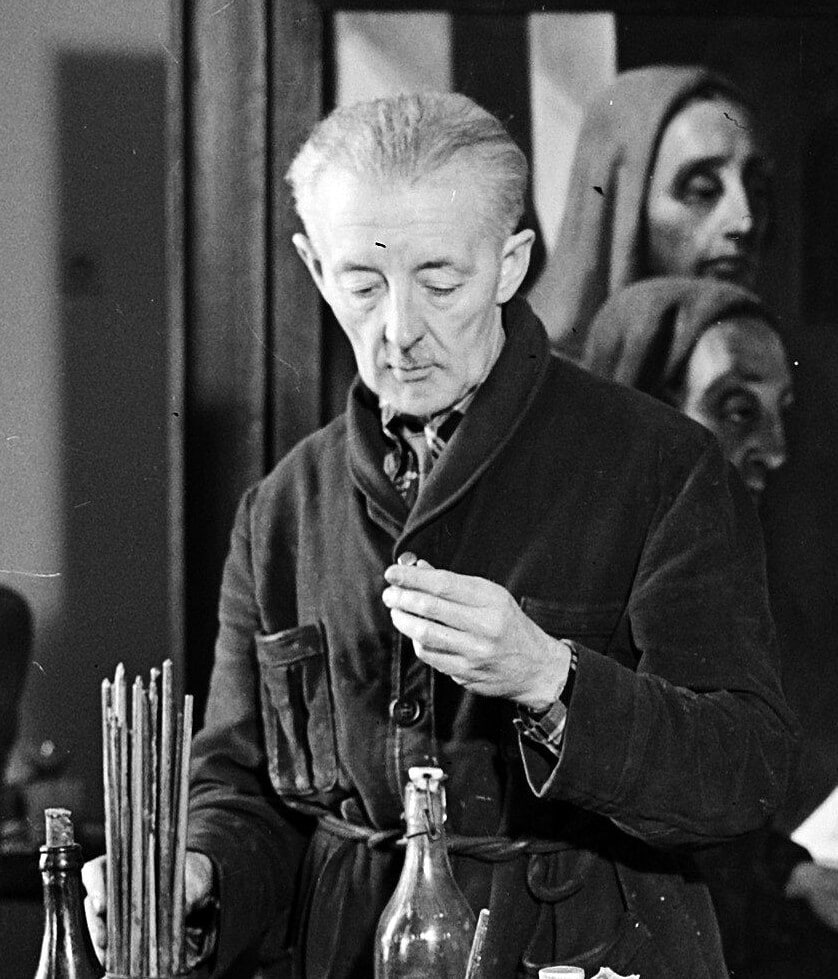
It’s the kind of rejection that festers. Van Meegeren watched lesser painters gain recognition. He watched trends shift toward modernism while he worked in the 17th-century Dutch manner. And somewhere in that frustration, a plan took shape: if the art world wouldn’t accept his own paintings, they would accept him…just under a different name. Under Vermeer’s name.
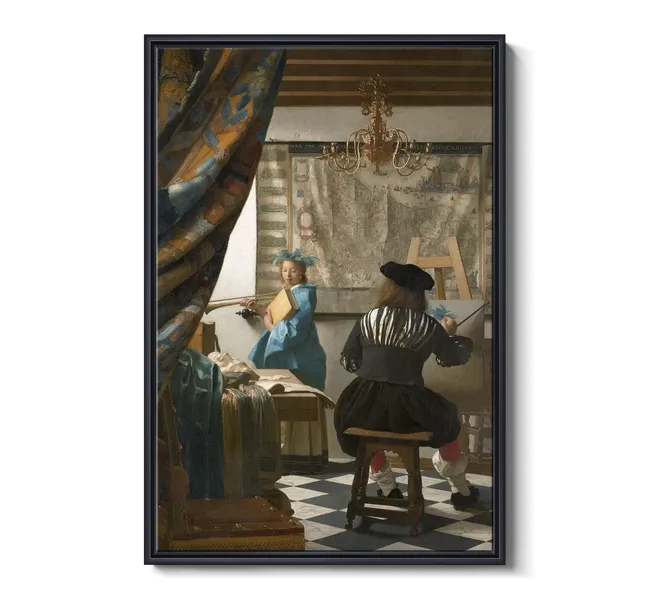
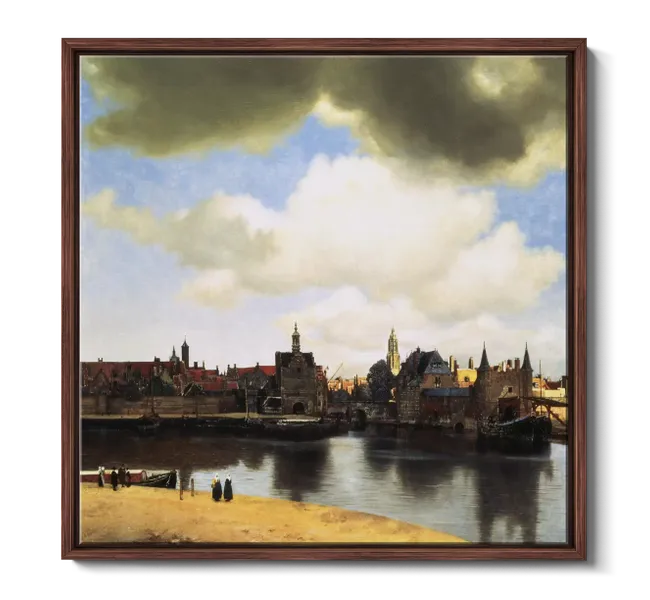
Johannes Vermeer was the perfect target. He was considered one of the greatest painters of the Dutch Golden Age, known for his mastery of light and domestic interior scenes of middle-class life. But there was an advantage: Vermeer died in obscurity in 1675, forgotten for nearly two centuries until his rediscovery in the 20th century. If a “new” Vermeer surfaced – one lost, misfiled, recently discovered, who could definitively prove it wasn’t authentic?
Johannes Vermeer’s Art
The Fake Vermeer: Becoming the Artist
Van Meegeren didn’t just pick up a brush. Over six years, he studied Vermeer’s methods obsessively, learning about historical materials, pigments, brushwork, and aging techniques to make his forgeries indistinguishable from the real thing.
His process was meticulous to the point of obsession:
- He hand-mixed his own paints using only pigments available in Vermeer’s time
- He hunted down 17th-century canvases to avoid suspicion from experts
- He created his own brushes to match Vermeer’s precise strokes
- He developed a revolutionary aging technique: baking paintings in an oven with synthetic resin to mimic centuries-old cracks and yellowing
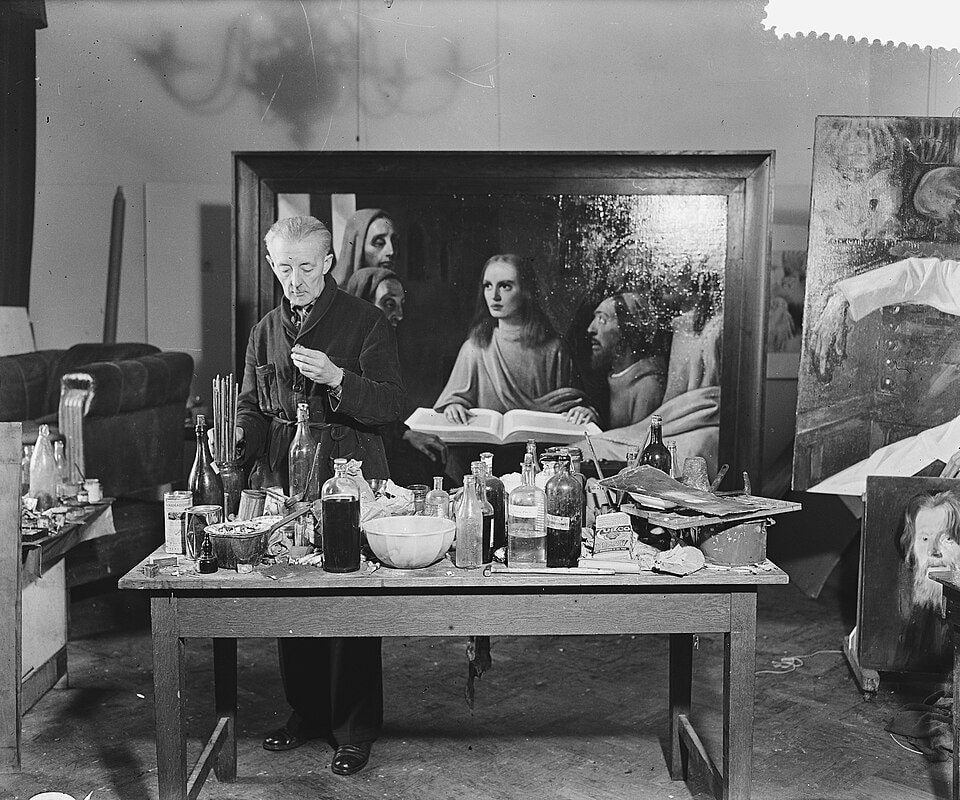
It wasn’t just skill. It was science. By the 1930s, Van Meegeren had produced paintings so convincing that museum directors and scholars authenticated them without hesitation. A “newly discovered Vermeer” could command millions. Critics praised the work as a lost masterpiece. No one suspected a thing.
Enter Göring
Then came World War II.
Nazi leader Hermann Göring was renowned for “collecting” art from countries which had fallen to the German army. He pillaged the Louvre in Paris, and sought famous and precious works of art from all over Europe, many of which were in the collections of Jewish Holocaust victims.

When Holland fell under German occupation in 1940, Göring set his sights on Dutch Old Masters. And he heard rumors of a Vermeer: a biblical scene, “Christ with the Woman Taken in Adultery,” attributed to the master himself. A painting that had somehow escaped the record books. A painting that might just complete his collection.
Van Meegeren, now wealthy from years of successful forgeries, was approached by a German intermediary, Alois Miedl. The price was extraordinary: 1.6 million guilders—the most expensive artwork sold during the war.
Göring lauded it as one of his most prized artworks.
What Göring didn’t know was that he had just paid a fortune for a painting created during the war, by a Dutch artist, specifically engineered to fool him. Van Meegeren’s fake Vermeer now hung in the private collection of one of history’s most notorious war criminals.
The Trap
By May 1945, the war was over. The Allies had invaded, liberating Holland. And as they swept through Nazi territory, they began cataloging the stolen art; works looted from across Europe, from museums and Jewish families and private collections.
Among Göring’s recovered treasures, Allied art commission officials were puzzled at the discovery of a hitherto unknown painting called “Christ and the Woman Taken in Adultery” attributed to Johannes Vermeer. It didn’t match any known Vermeer. It wasn’t in scholarly records. Where had it come from?
The trail led back to Holland. To Van Meegeren.
In 1945, he was arrested and faced with charges of collaboration with the Nazis. Collaboration during wartime meant treason. And treason, in 1945 Holland, meant death.
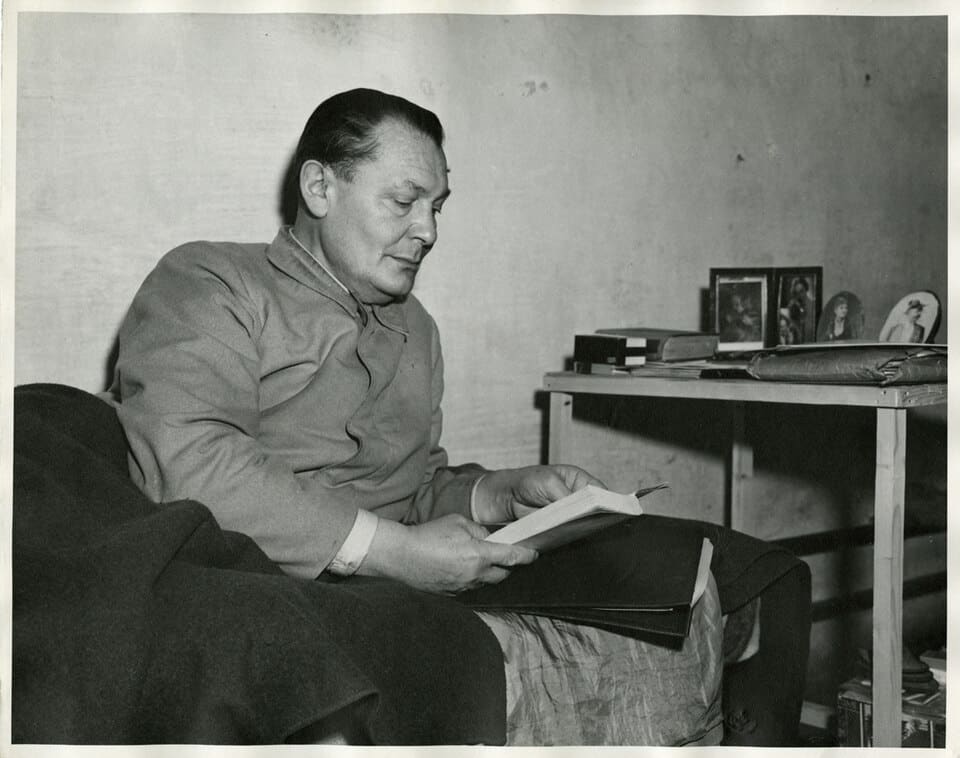
Van Meegeren sat in a cell facing execution.
The Impossible Defense
Here’s where the story becomes truly strange.
Van Meegeren confessed, not to treason, but to forgery. He claimed the painting was a forgery by his own hand, not an authentic Vermeer.
Collaborators typically denied their crimes. But Van Meegeren leaned into his: Better to be known as a con man than a traitor. Better to be convicted of fraud than treason.
The prosecution was skeptical. The judges didn’t believe him. How could a Dutch artist have created a work so sophisticated that Göring’s experts, people trained in authentication, had accepted it as genuine? At the time, forensic painting analysis was not advanced.
But Van Meegeren had a solution: he would prove it by doing it again.
Proof in the Courtroom
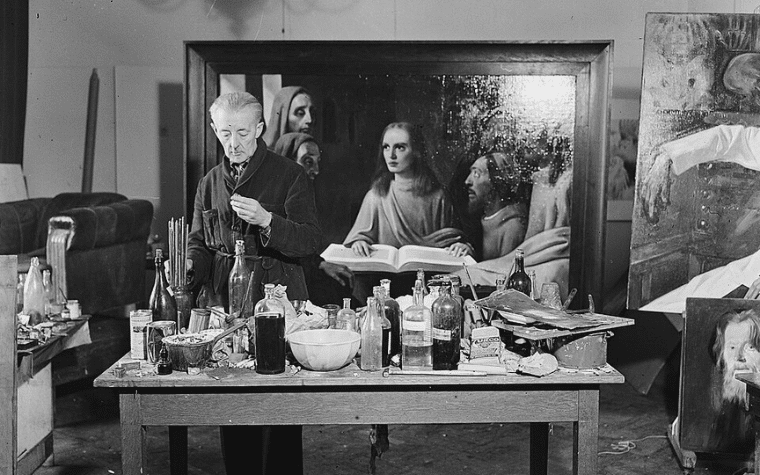
In 1947, Van Meegeren’s trial took place in the Regional Court of Amsterdam. Locked within the courtroom, he agreed to create one last forged Vermeer titled “Jesus Among the Doctors” live before the audience. What followed was a flawless recreation of Vermeer’s signature style, thereby proving to the breathless court that he had indeed conned the Nazis.
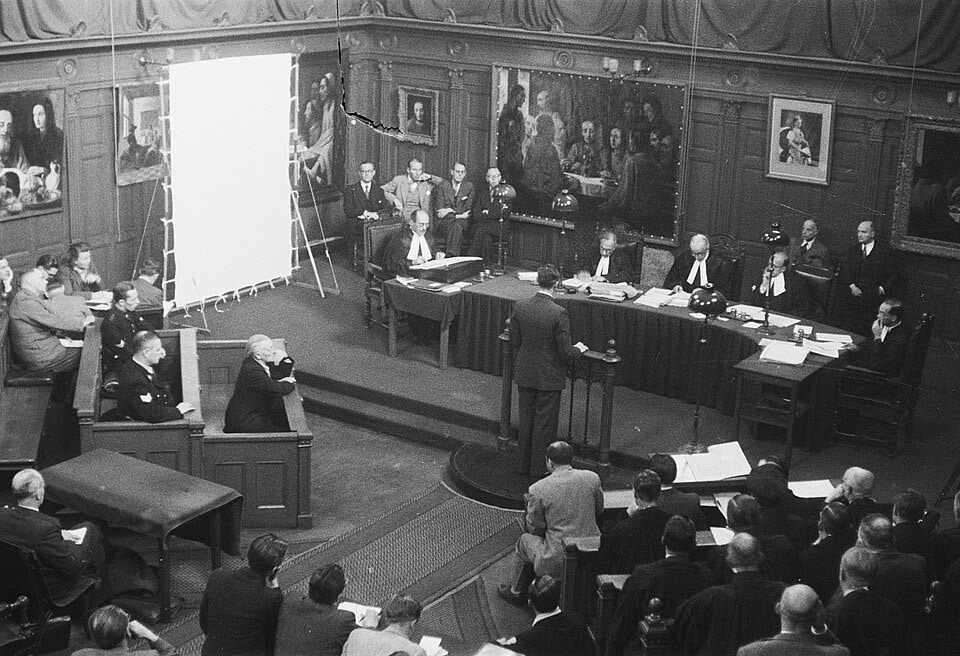
Imagine that moment. The artist, under observation, without access to his usual materials or studio. Creating a painting that would determine whether he lived or died. And doing it so perfectly that the judges could no longer deny the truth: this man didn’t need Vermeer’s help. He was Vermeer.
Van Meegeren was acquitted of treason charges and sentenced to one year in prison for fraud. He died in December 1947, before serving his full sentence.
Why It Still Matters
Van Meegeren’s forgeries revealed something unsettling about expertise itself. Art scholars, museum directors, collectors, people whose entire careers rested on distinguishing real from fake, had been completely fooled. Not by sloppy work, but by perfection. By someone who understood Vermeer so deeply that he could become Vermeer.
Today, of the works Van Meegeren created, several remain unresolved in the scholarly record. Some paintings once thought to be Vermeer’s have been demoted to “school of Vermeer” or “unknown hand.” Others hang in museums with revised plaques. The uncertainty is part of his legacy.
But there’s another legacy worth remembering: Van Meegeren claimed he traded his forgery for approximately 127 works of Dutch art that would have otherwise stayed with the Nazis. Whether that claim holds water or not, the paintings he sold to Göring, the work that earned him his death sentence, became the bridge to recovering stolen masterpieces.
Vermeer himself lived modestly in Delft, creating intimate domestic scenes that have captivated collectors for centuries. His work, luminous, quiet, technically perfect, lives on in homes across the world, including the homes of art lovers who find his style in contemporary wall art. Van Meegeren understood that appeal so deeply that he could replicate it flawlessly. And in doing so, he created one of history’s greatest art world scandals.

Vermeer’s luminous works remain as captivating today as they were in the 17th century. Explore his complete collection on iCanvas and discover why van Meegeren’s obsession with perfecting his work was so well-founded.