
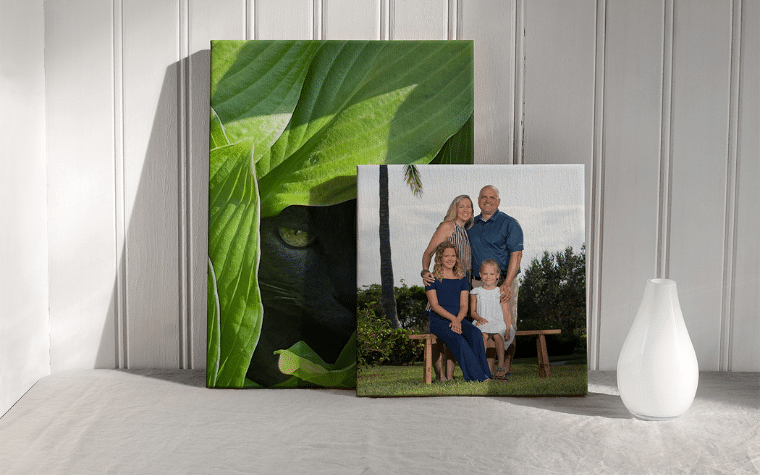
What Photos Make the Best Custom Wall Art? | iCanvas
Custom art made from your own photos is one of the easiest ways to make a room feel personal, but not every photo on your camera roll is meant for your walls. Some look incredible printed at scale, others fall flat. Here’s how to pick the winners.
Table of Contents
TL;DR: What Photos Make the Best Custom Wall Art?
- Resolution matters most; aim for the highest quality original file
- Simple compositions with a clear subject tend to print better than busy shots
- Natural light almost always wins over flash
- Landscape/travel photos, candid portraits, and detail shots are crowd favorites
- Consider the room’s color palette and mood before choosing
What Makes a Photo Look Good as Wall Art?
There’s a big gap between “looks great on my phone” and “looks great blown up on your living room wall.” Some of the best custom wall art comes from photos you barely noticed on your camera roll. It comes down to three things: resolution, composition, and lighting.
- Resolution is non-negotiable. Your photo needs enough pixel data to hold up at a larger size without looking soft or grainy. Most recent smartphones shoot at high enough resolution to print beautifully, as long as you’re working with the original file. If you shot it on your phone at full resolution and haven’t cropped it down, you’re probably in good shape.
- Composition is what fills a wall confidently. Photos with a clear subject and some breathing room around it tend to print better than busy, cluttered shots. If you want to get a feel for what makes a strong photo composition, even a basic understanding of framing and balance goes a long way.
- Lighting makes more of a difference in print than it does on a screen. Natural light almost always wins. Photos taken near windows, outdoors, or during golden hour tend to have richer tones and smoother gradients that translate beautifully to wall art.
What Types of Photos Work Best as Custom Wall Art?
Not sure where to start? These are the types of photos that consistently look incredible on walls – and chances are, you already have a few of them sitting in your camera roll right now.
Landscape and Travel Photos
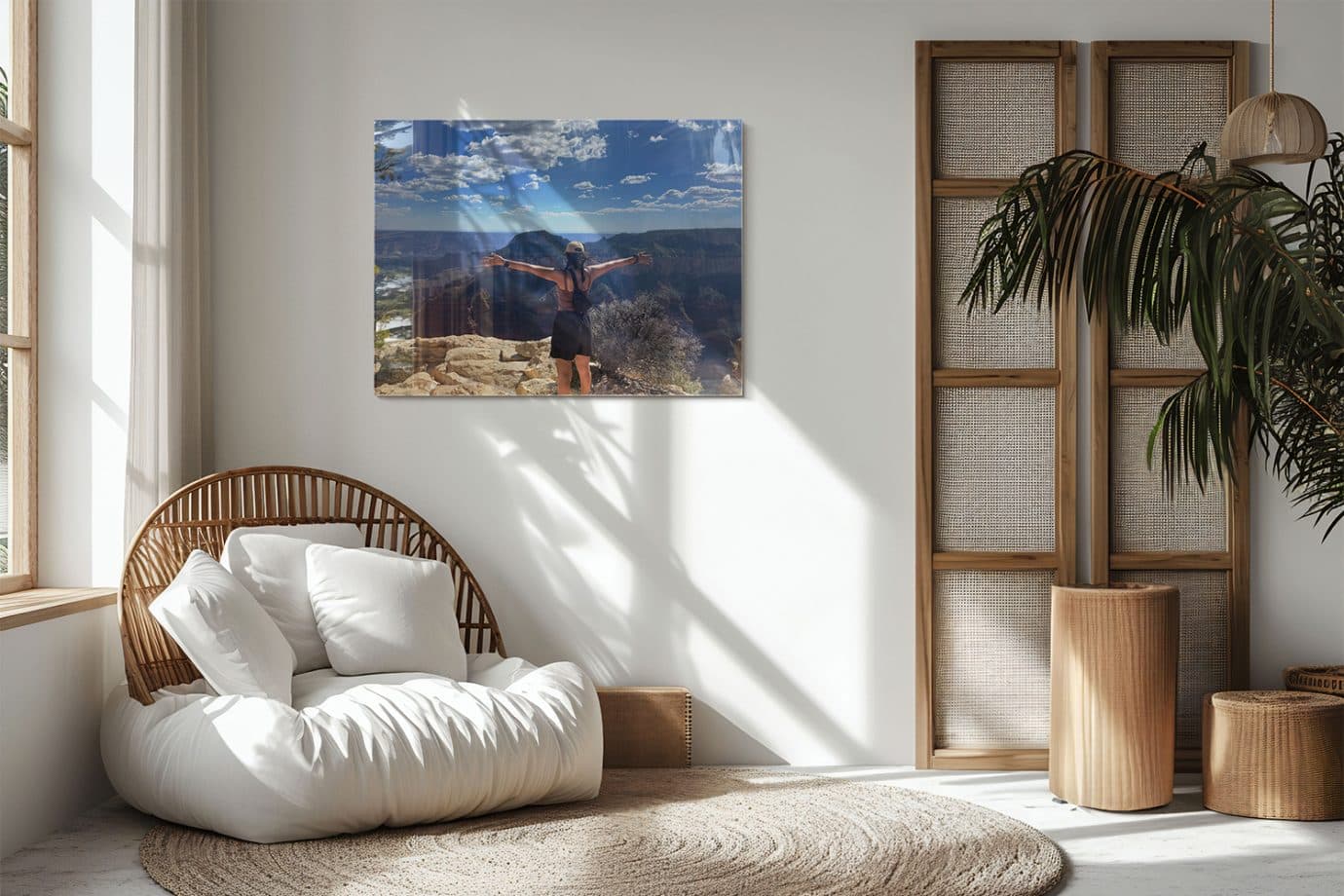
Wide, atmospheric shots are practically made for wall art. Think sweeping coastlines, city skylines at dusk, mountain ranges, or that one street in a town you visited three years ago that you still think about. These photos tend to have strong natural light, balanced compositions, and a sense of place that fills a room with energy.
Travel photos work especially well in living rooms and hallways where you want something that feels expansive and sets a mood. If you’ve got a landscape shot with interesting depth, that’s usually a strong candidate.
Candid Portraits and Family Moments
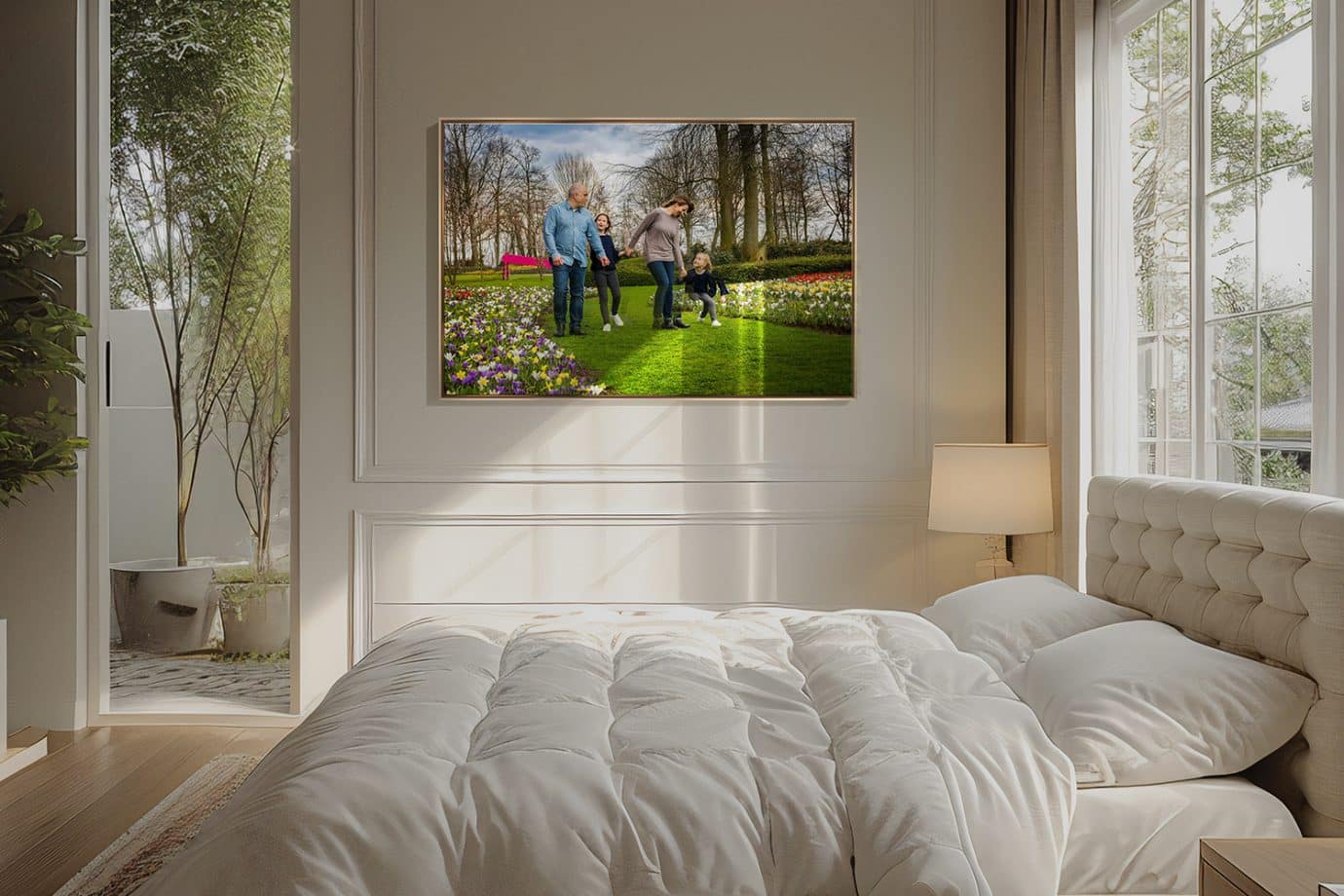
The best portrait wall art almost never comes from a posed session. It’s the in-between moments – someone laughing mid-conversation, a kid caught mid-jump, a quiet moment at a family dinner. Candid shots carry emotion in a way that staged photos just can’t replicate.
What to look for: soft, natural backgrounds that don’t compete with the subject, genuine expressions, and good lighting (window light is your best friend here). These are the photos that make a house feel like a home, and they work beautifully in bedrooms, hallways, and any space where you want something personal.
Pet Photos
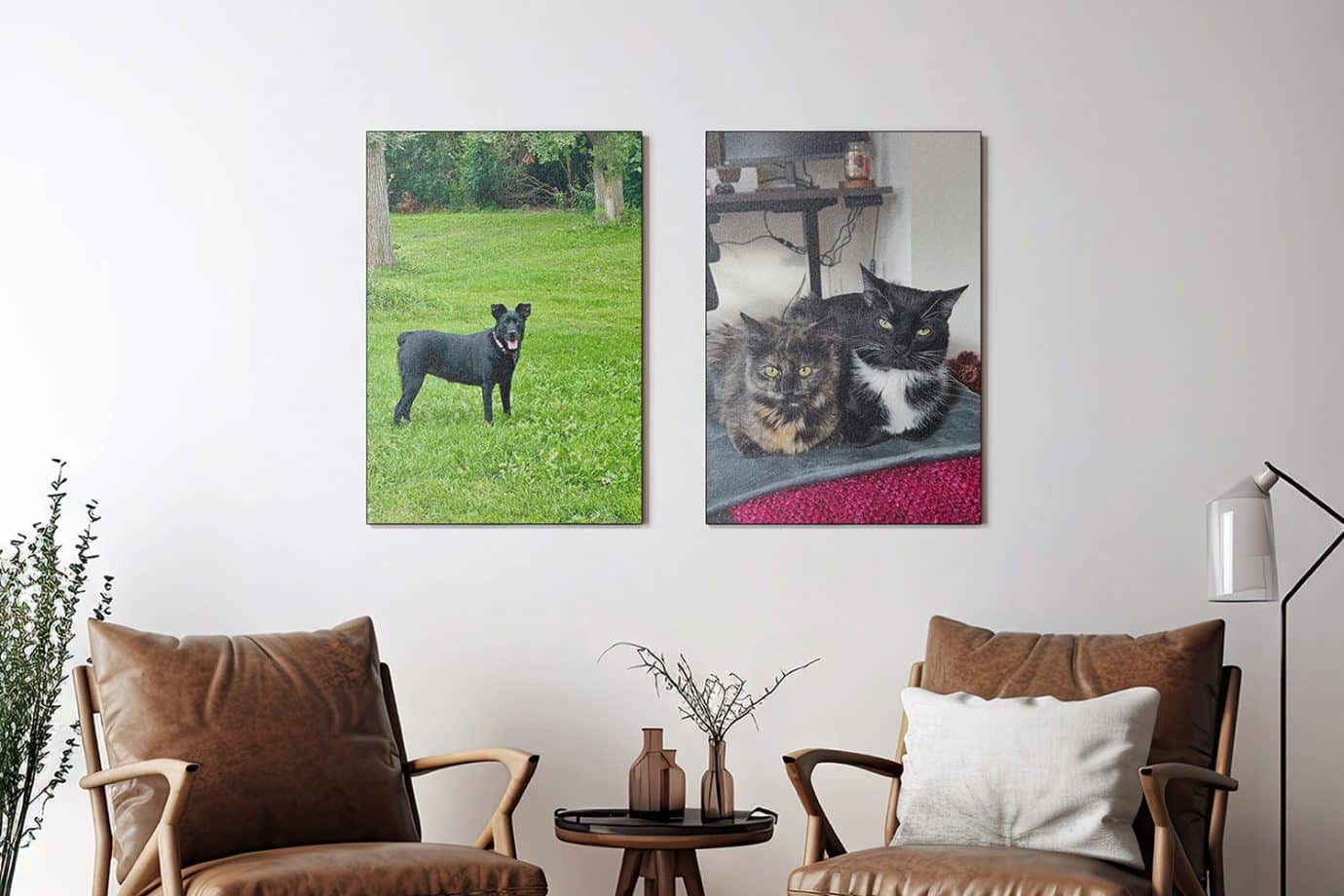
If your phone storage is 40% photos of your dog, you’re not alone, and some of those shots are genuinely wall-worthy. The key is sharp focus on the face (especially the eyes) and a natural setting. A photo of your cat lounging in a sunbeam will almost always print better than a staged shot with a costume and a backdrop.
Pet photos work in just about any room and tend to be instant conversation starters. They’re also a meaningful way to honor a pet’s memory with something you see every day.
Detail and Close-Up Shots
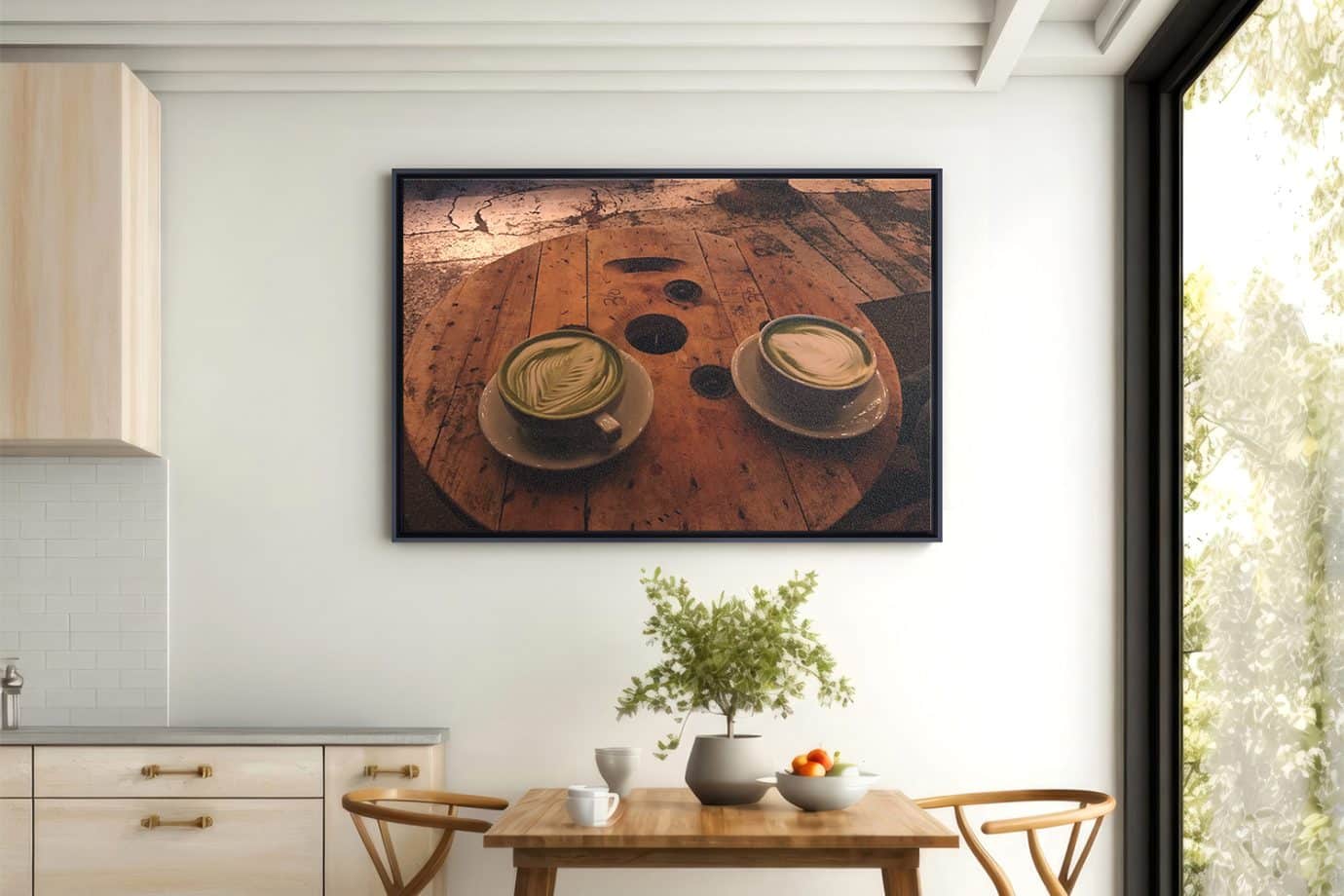
These are the secret hits of custom wall art. A close-up of a flower in your garden, an interesting architectural detail you noticed on a walk, a perfectly plated meal, the texture of a weathered door; these photos are often overlooked because they don’t feel “important” enough. But printed at scale, they become striking, almost abstract pieces that add visual interest to a room without overwhelming it.
Detail shots are especially effective in kitchens, bathrooms, and home offices – spaces where you want something visually interesting but not overly personal. They also pair well in sets of two or three for a gallery-style arrangement.
Colorful and Eye-Catching Shots
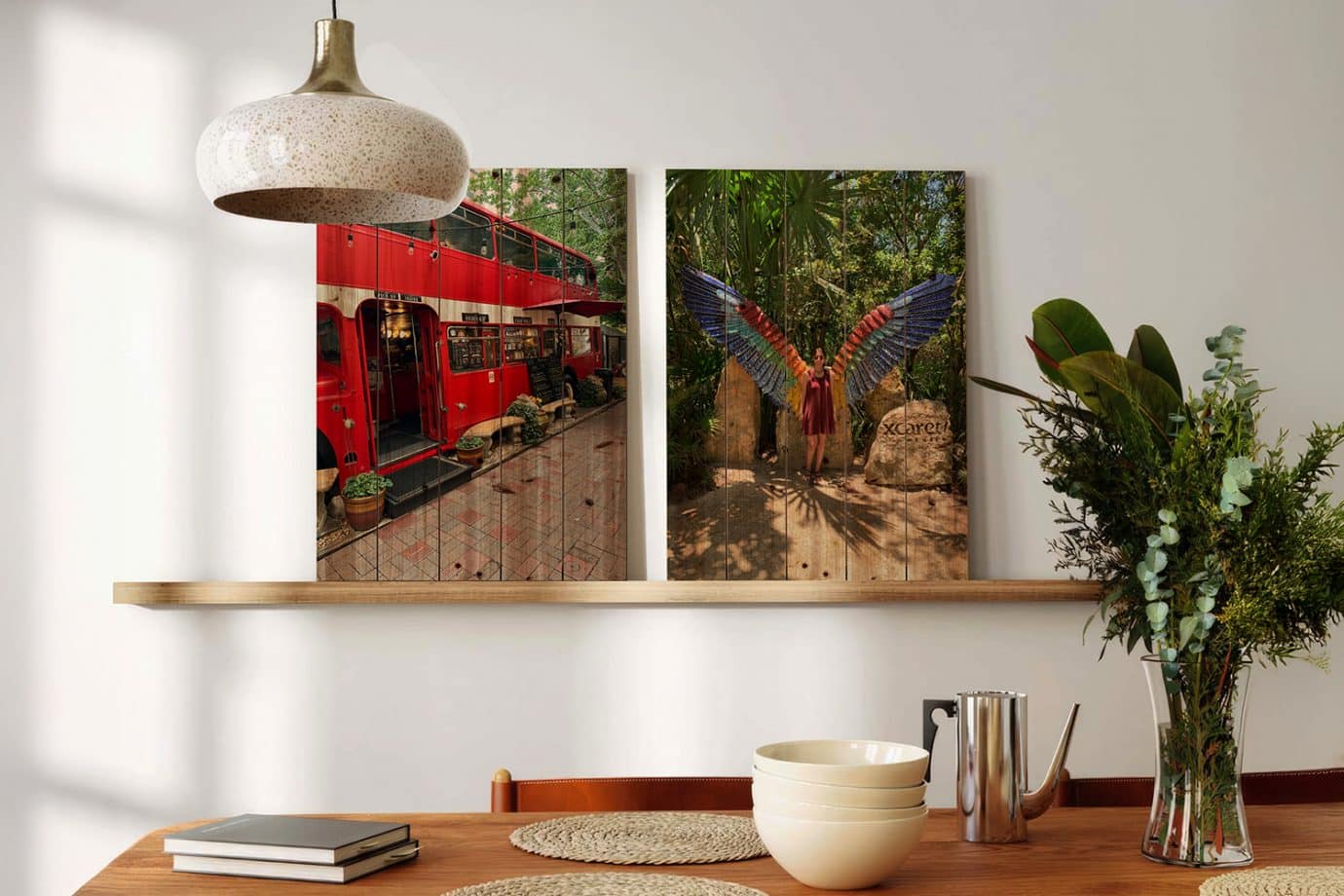
Some photos just have that visual energy: a bright mural you walked past, a vibrant market scene, a plate of food that looked almost too good to eat, or your garden in full bloom. These are the shots that pop off the wall and immediately draw your eye.
Color-forward photos work especially well in spaces that need a lift, like neutral rooms where the art becomes the focal point. They’re also a natural fit for kitchens, dining areas, and any room where you want the vibe to feel lively and inviting.
What Photos Should You Probably Skip?
Not every meaningful photo is meant for the wall. Here are a few types that tend to disappoint in print, no matter how much you love them on your phone.
- Group photos where everyone is tiny. If you want people in your wall art, go for tighter framing with fewer subjects rather than a wide shot.
- Dark or blurry shots. Your phone can brighten a dark photo enough to look decent on screen, but print doesn’t forgive the same way.
- Heavily cropped images. Every time you crop, you’re throwing away pixel data. A photo that started at high resolution can end up low-res fast if you’ve zoomed in on a small section.
- Photos with text overlays or watermarks. Memes, screenshots with captions, and photos with branded watermarks don’t translate to wall art. If the original file exists without the overlay, use that instead.
- Overly busy backgrounds. A great subject can get lost when there’s too much happening behind it. If your eye doesn’t immediately know where to look, the photo is going to feel chaotic at a larger scale.
How Do You Pick the Right Material for Your Photo?
The material you print on changes the entire feel of your custom wall art. Here’s some quick tips to help you match your photo to the right format.
Canvas Art
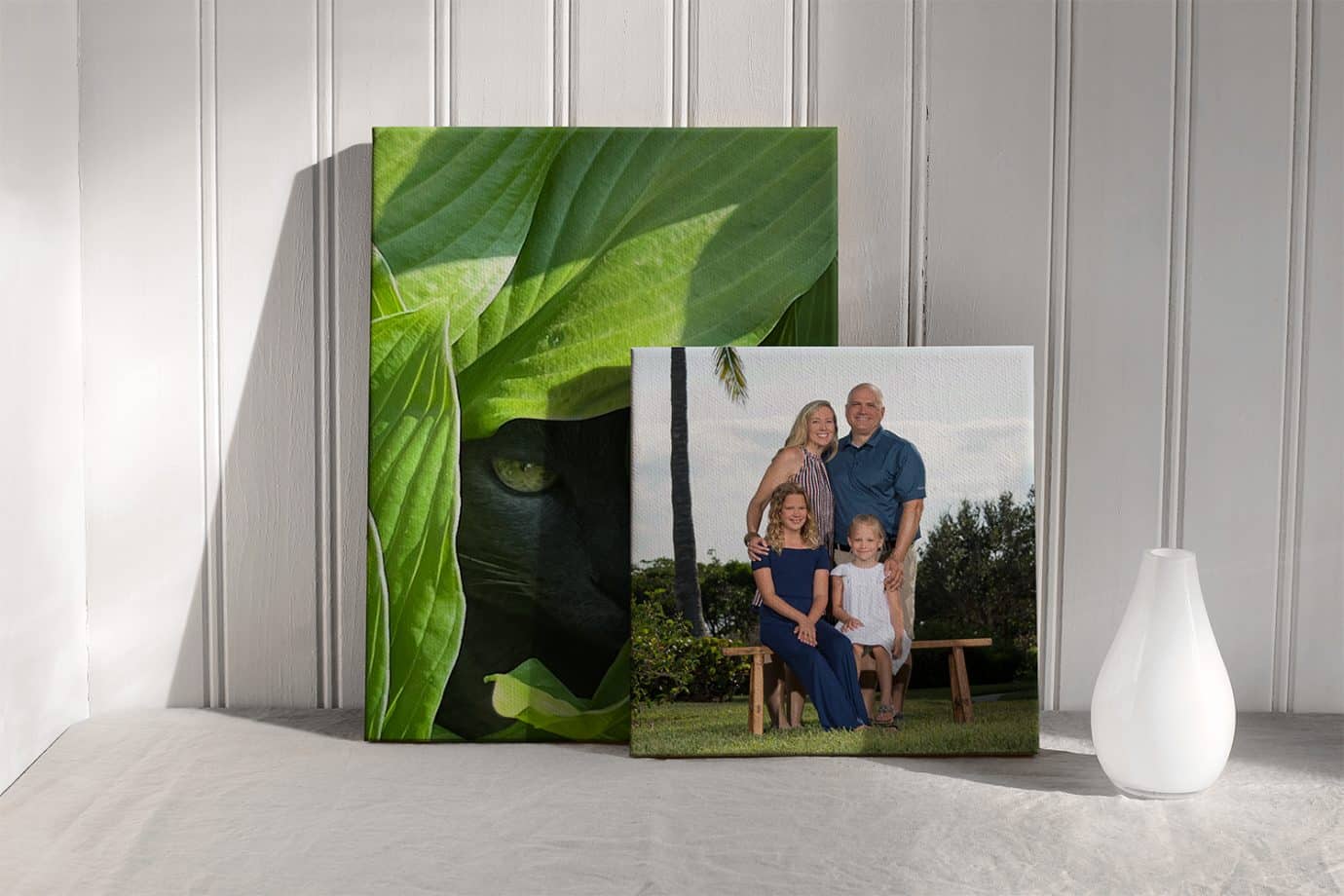
Canvas is the go-to for a reason. It adds warmth and a slightly textured look that works beautifully with portraits, landscapes, and anything with soft, natural tones. If you’re not sure what to pick, canvas is a safe bet that looks good in virtually any room.
Steelpix Metal Art
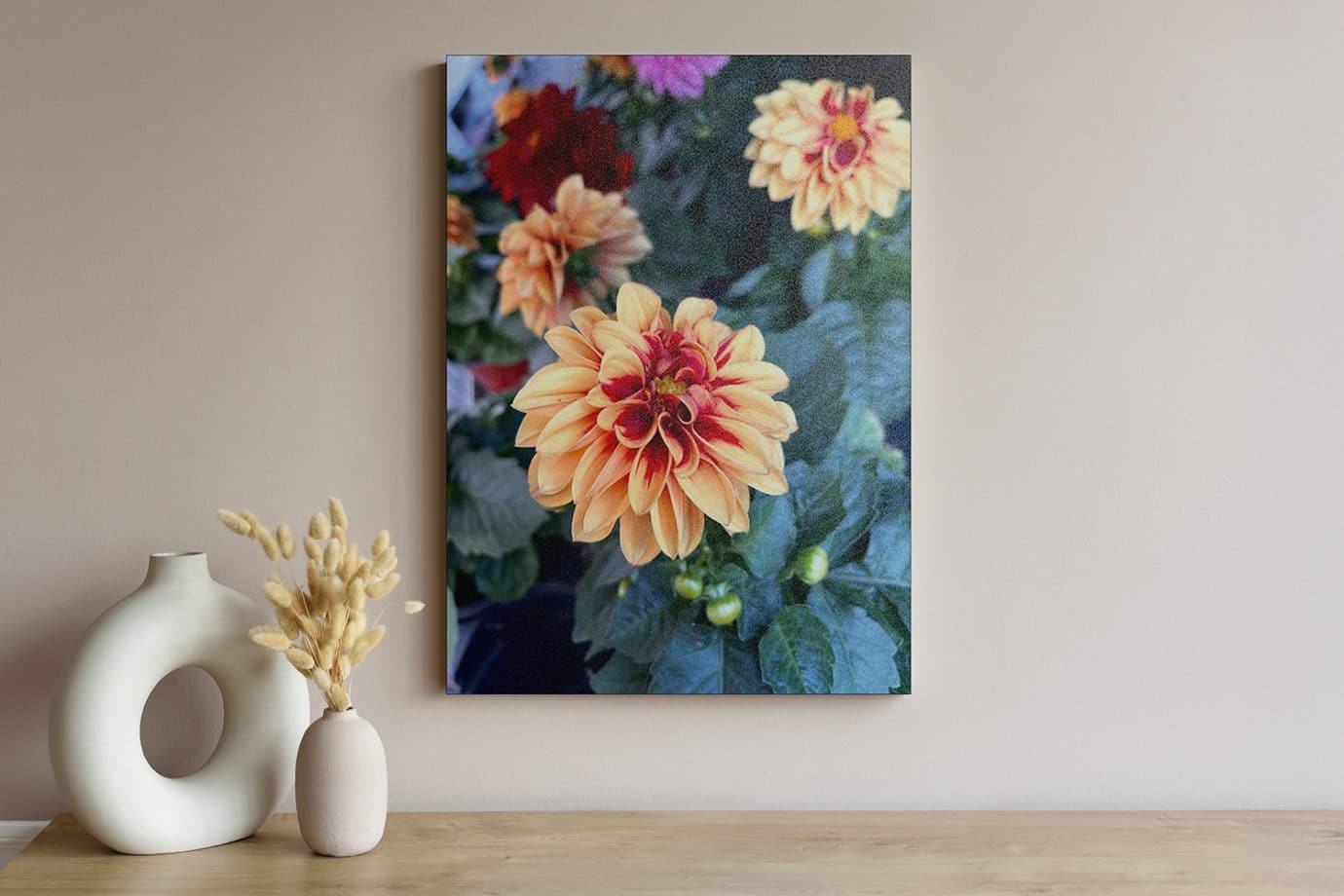
Steelpix is where saturated, vibrant photos really come alive. A close-up of a bright flower, a punchy cityscape, a bold detail shot; anything with strong color and contrast will pop on metal in a way that other substrates can’t quite match. Plus, the simple to hang format makes it easy to start small and keep adding over time.
Acrylic Glass Art
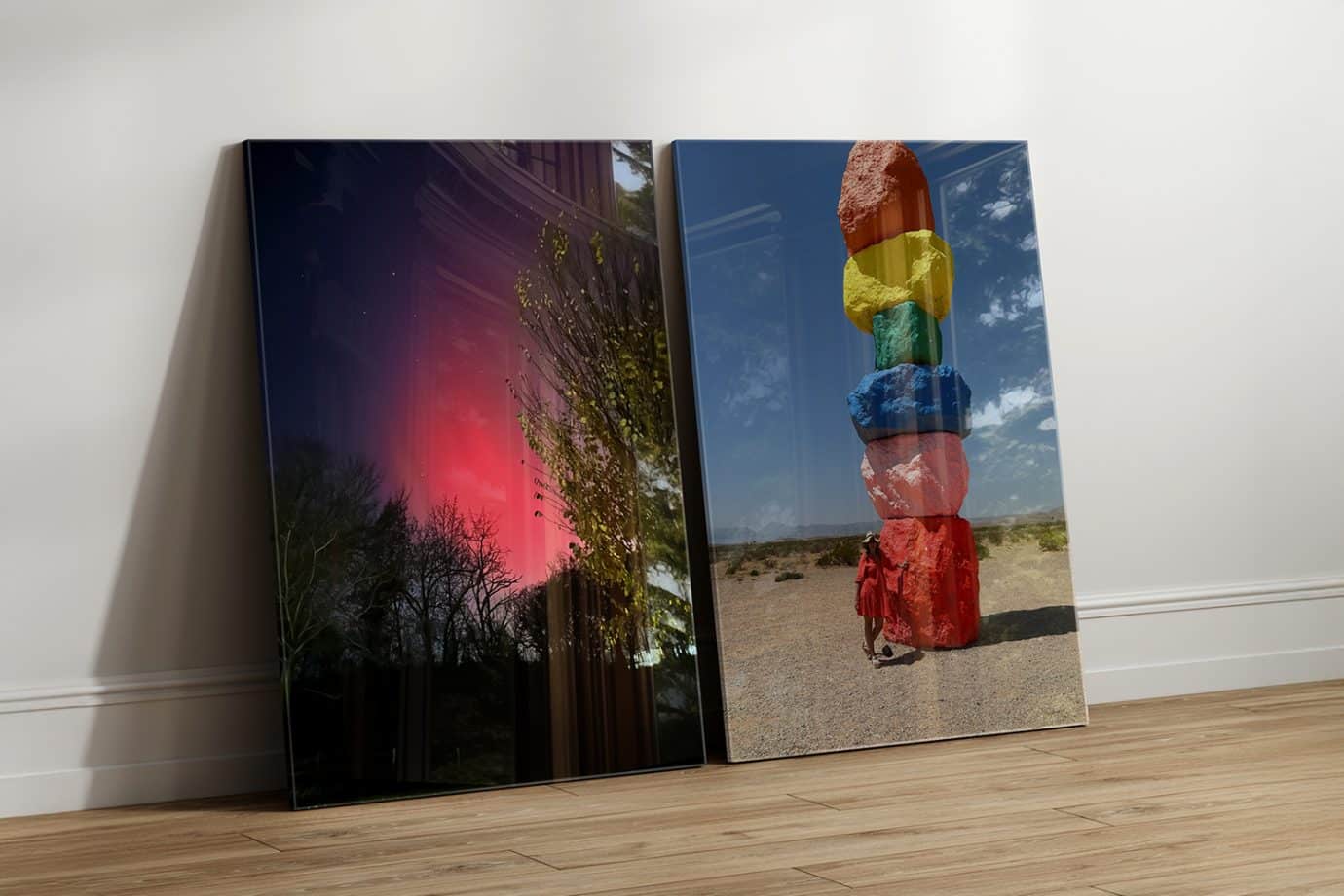
Acrylic is the premium choice for high-impact images. It adds depth and a glossy finish that makes colors look almost backlit. Best for colorful, dramatic photos – vivid landscapes, bold street scenes, or any image with rich tones where you want a real showstopper.
Wood Art
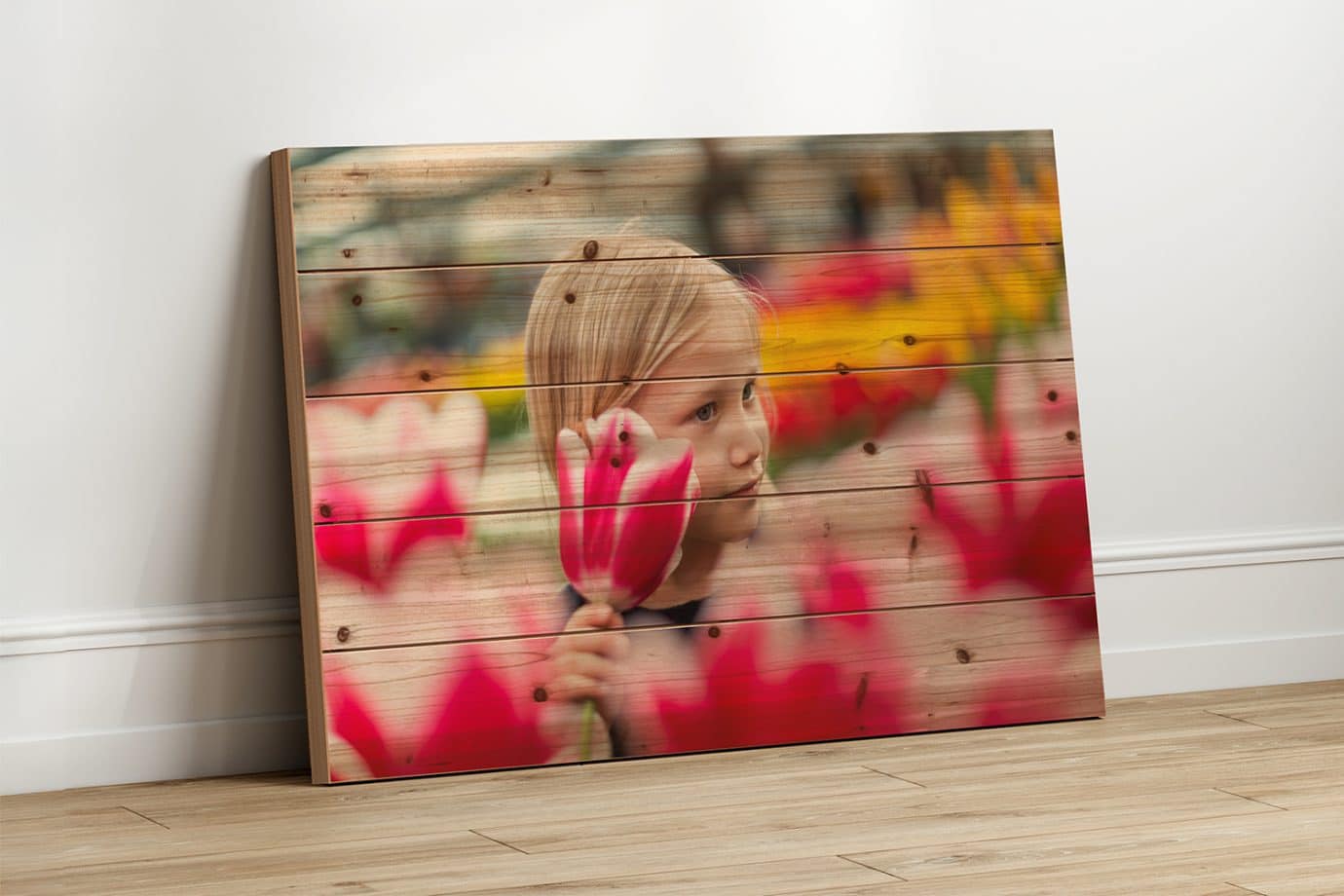
Wood prints bring a warm, organic quality that you can’t get from any other material. The natural wood grain shows through lighter areas of the photo, adding texture and character that makes every print one of a kind. They’re a perfect match for nature photography, earthy tones, rustic aesthetics, and any photo where you want that handcrafted, tactile feel.
Print Your Own Custom Wall Art
Your best photos deserve more than a camera roll. Turn them into custom wall art – pick your material, choose your size, and get it on your wall.
Custom Wall Art FAQ
▼View the Questions
Can I turn an iPhone photo into wall art?
Absolutely. Modern iPhones (and most recent Android phones) shoot at more than enough resolution for large-format prints. Just make sure you’re using the original photo file – not a screenshot, not a version you downloaded from Instagram, and not one that’s been heavily cropped. The original straight from your camera roll is what you want.
What’s the minimum resolution for a large print?
It depends on the size, but generally you want at least 150 DPI at your target print size. For a 24×36 canvas, that means an image around 3600 x 5400 pixels, which most modern phone cameras exceed. If the math feels like too much, just [upload your photo] and we’ll make sure it looks great.
Do edited or filtered photos print well?
Light editing – brightness, contrast, cropping, is totally fine and can actually improve a print. Heavy filters are where things get tricky. Instagram-style filters can introduce color shifts and graininess that look fine on a small screen but fall apart at print scale. When in doubt, go with the most natural-looking version of the photo.
Can I print someone else’s photo?
If you took the photo or the photographer has given you permission, you’re good. But photos you found online, professional photos from a session where you don’t own the rights, and images pulled from social media are typically copyrighted. When in doubt, check with the photographer; most are happy to discuss print permissions.
What if I’m not sure how it’ll look? Can I preview it first?
Yes! Within 48 hours, our graphic artists will remove red eyes, brighten, sharpen, and color-correct to help your image look its best. Then we’ll send it to you for approval before printing.