
Caravaggio: The Superstar Painter Who Lived Like a Fugitive | iCanvas
Caravaggio is one of the most famous painters in art history, and also one of the only ones with an actual manhunt in his biography. He painted some of the most reverent, quietly devastating religious scenes in Western art.
He also killed a man in the street, spent his final four years as a fugitive with a legal bounty on his head, and died before he ever made it home. Most Caravaggio biographies open with a birthplace and a training timeline. This one opens with the crime.
The Making of a Problem
Michelangelo Merisi da Caravaggio grew up in Milan under the shadow of a fire-and-brimstone Counter-Reformation archbishop. By the time he left for Rome in 1592, he’d already gotten into “certain quarrels” involving the wounding of a police officer.
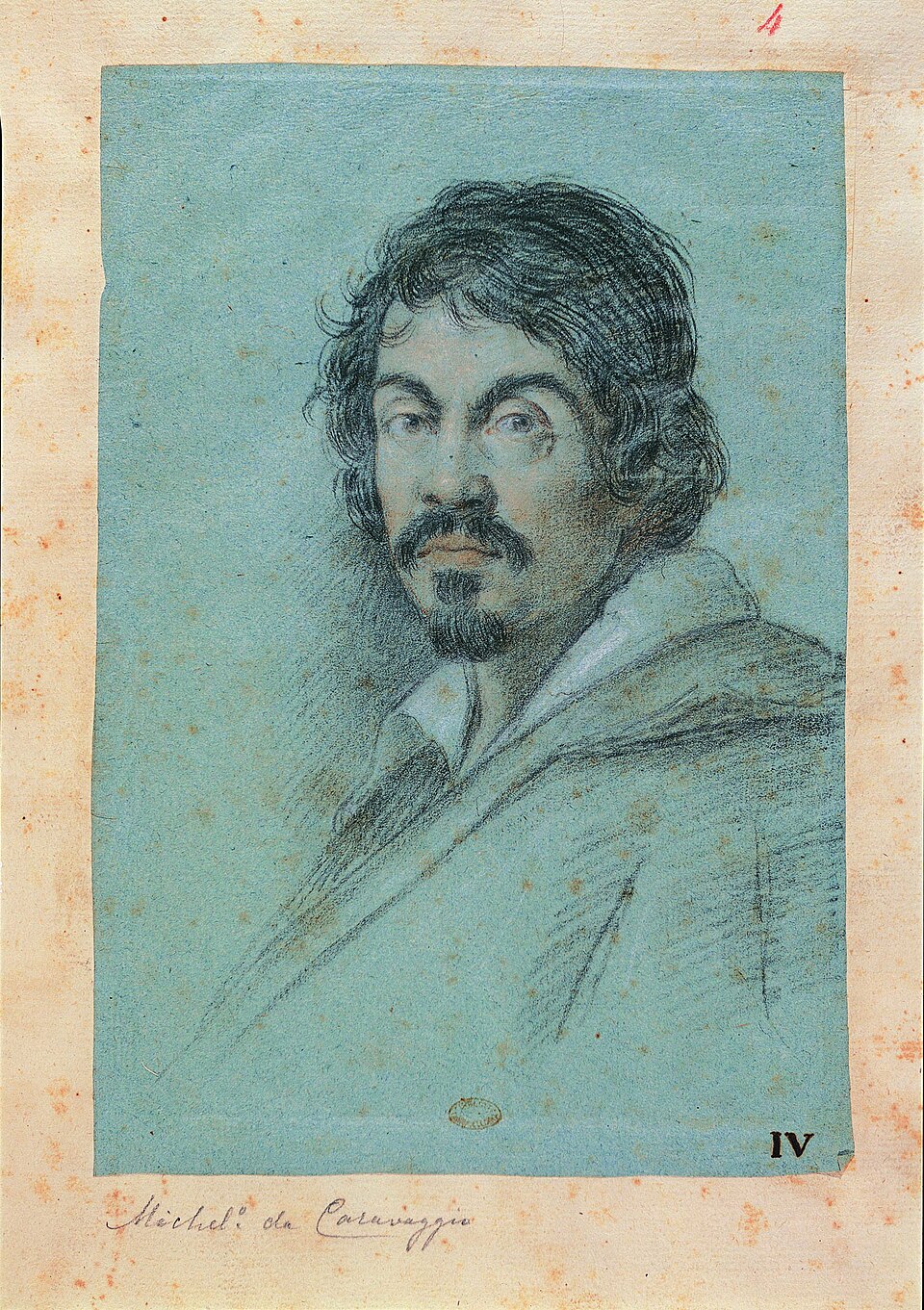
He showed up in Rome broke, but he didn’t stay broke for long. He started painting from real life instead of from idealized classical models, which was considered scandalous back then:
- His saints and biblical figures had dirty feet
- His models were beggars, street performers, and sex workers
- He even painted himself
It was all too real for the art establishment’s taste, and it was exactly what made him famous.
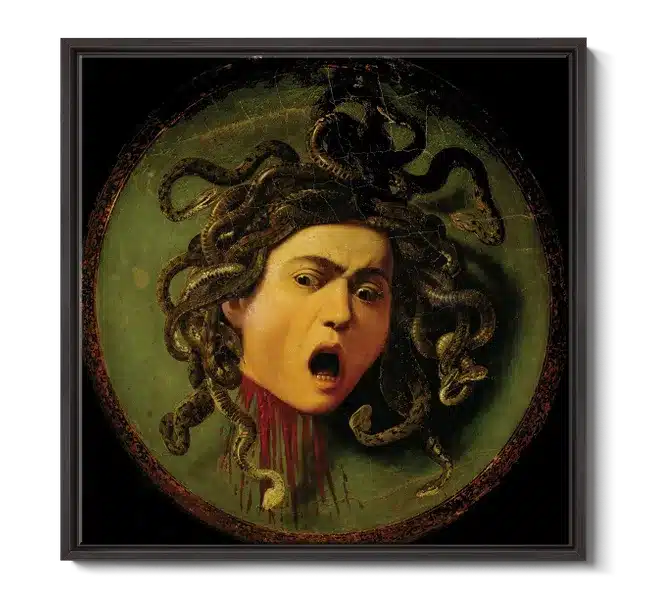
Cardinal Francesco Maria del Monte became his patron early on, and one of the first things he had Caravaggio paint wasn’t a saint at all. It was Medusa, on a ceremonial shield meant as a diplomatic gift for the Medici family in Florence. The Gorgon’s screaming, severed head is Caravaggio’s own face, painted nearly a decade before he’d have any real reason to paint himself as a monster. This is worth remembering later, because he does it again.
Del Monte’s connections got him his first major public commission in 1599, a cycle of paintings for the Contarelli Chapel at San Luigi dei Francesi. It made him the most talked-about painter in Rome.
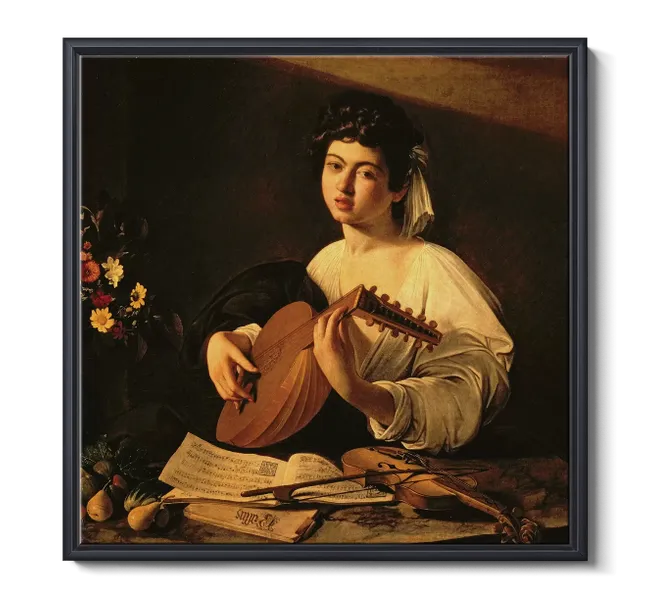
However, it didn’t make him a calmer or a changed person. He was already known to walk around with a sword and picked fights at the local ball courts, and that habit was about to catch up with him.
The Night Everything Changed
On the night of May 28, 1606, Caravaggio killed a man named Ranuccio Tomassoni in a street brawl in Rome. The official story is a dispute over a tennis wager, though some historians think that’s cover for something more personal, possibly a rivalry over a woman. To this day, no one has settled on the full, truthful story; the ambiguity is part of the intrigue.
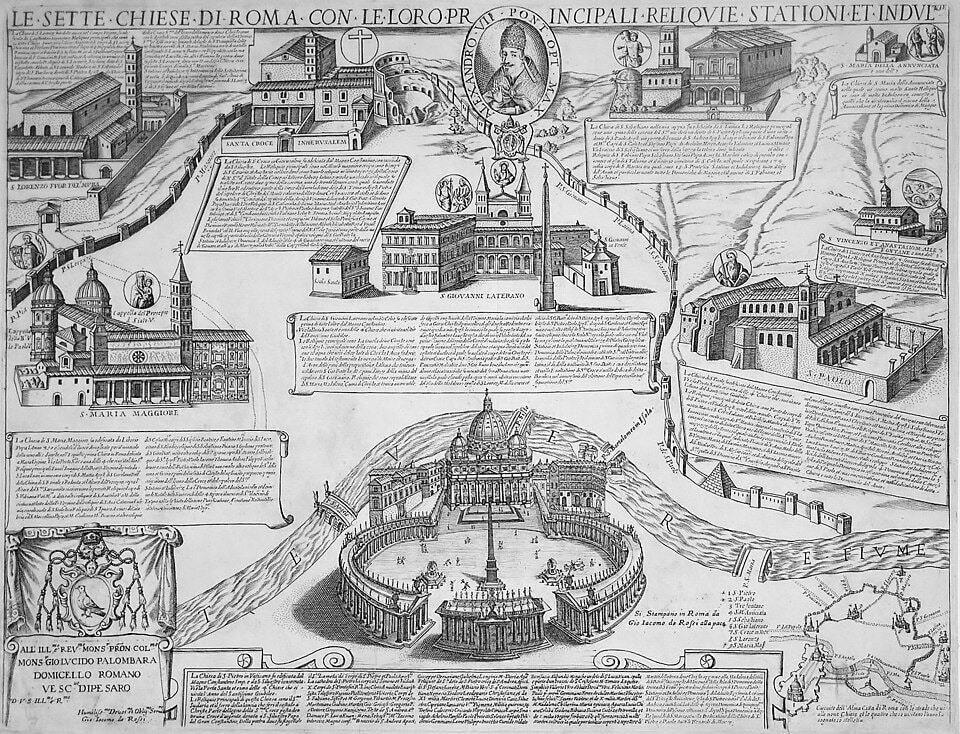
Pope Paul V sentenced him to death in absentia, meaning the ruling was made without him ever appearing in court. It was a bando capitale, a legal declaration that made him fair game: any person, anywhere in the papal states, was permitted to kill him on sight without consequence. He fled Rome that night and he never saw the city again.
Life on the Run
Most people with a death sentence try to run and start a new life, so it’s no surprise that Caravaggio did that himself. Caravaggio went to Naples, then sailed to Malta and joined the Knights of Malta, which seemed like an attempt to buy his way back into respectability through knighthood. It nearly worked.
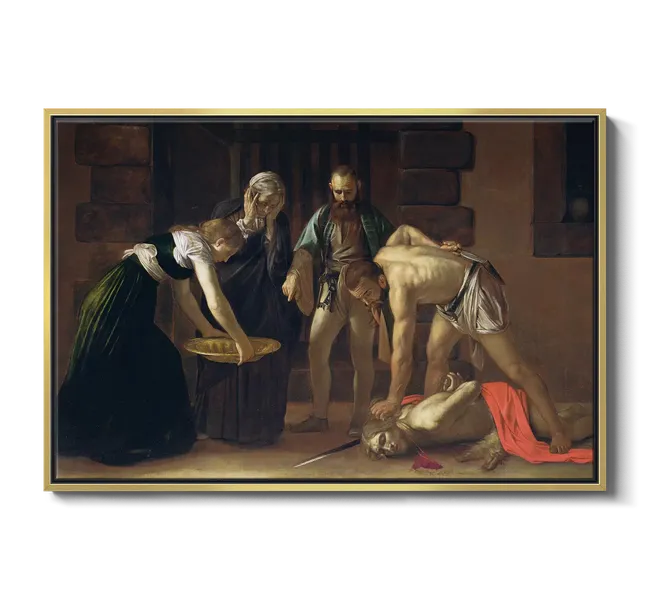
He painted The Beheading of St. John the Baptist as an altarpiece for the Knights, and on July 14, 1608, Grand Master Alof de Wignacourt formally accepted him as a Knight of Obedience, despite being fully aware of Caravaggio’s past.
His good behavior lasted about six weeks. By late August 1608 he was in a brawl that left several knights wounded, and he was thrown into an escape-proof rock-cut cell in Fort St. Angelo. He escaped anyway, apparently by scaling a wall and lowering himself to a waiting boat. On December 1, 1608, in a meeting held in the Oratory of St John’s Church,in front of the painting he’d made for them, he was “expelled and thrust forth like a rotten and fetid limb” from the Order.
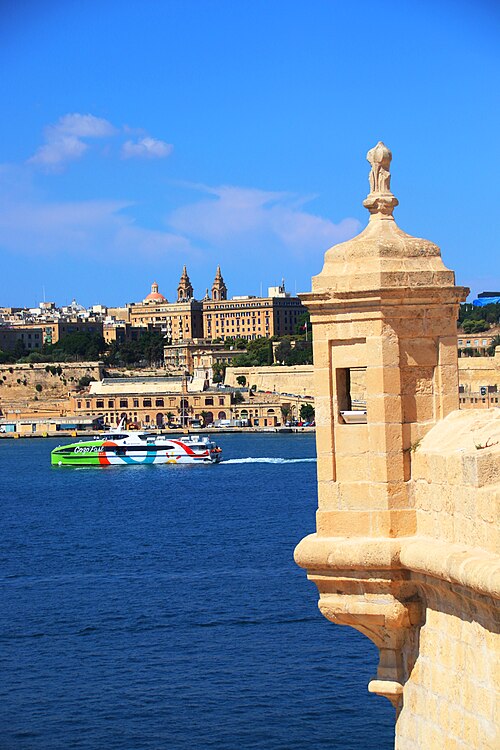
From there it was Sicily, then back to Naples, where four men ambushed and badly disfigured him outside a tavern, in what most historians assume was retaliation tied to the Tomassoni killing or to his enemies at the Order.
The Death Nobody Has Fully Explained
In 1610, word reached Caravaggio that a pardon from Rome might finally be within reach. He set out to make the journey back, but he never arrived. He died in Porto Ercole, on the Tuscan coast, at 38 years old.
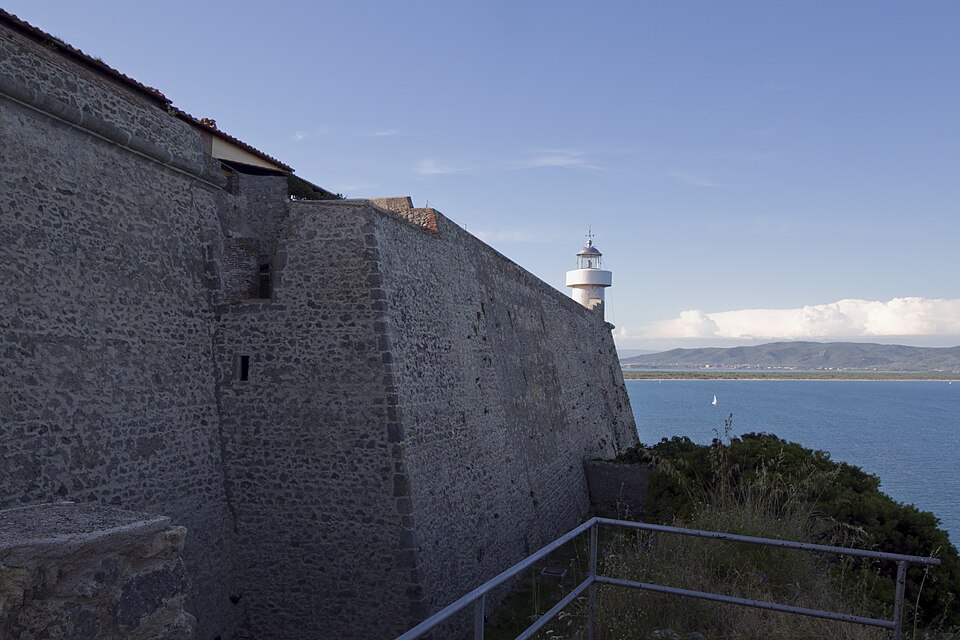
The official record blamed fever. Since then, the theories have piled up steadily: malaria, lead poisoning from his own paints, an infected wound gone septic, even outright murder by the Tomassoni family or by enemies from his Malta days settling a score.
A 2018 study in The Lancet Infectious Diseases analyzed his remains and argued for staph sepsis from an infected sword wound, pushing back on decades of assumptions that syphilis or lead poisoning was the culprit. Even now, four centuries later, nobody has closed the case on the actual cause of death.
What the Paintings Look Like Once You Know All This
Once you know the biography, the paintings stop looking staged and start looking observed, like he caught these moments rather than arranged them.
Take that Medusa shield again. Caravaggio painted his own face onto her screaming, severed head years before the murder, before there was any death sentence to read symbolism into.
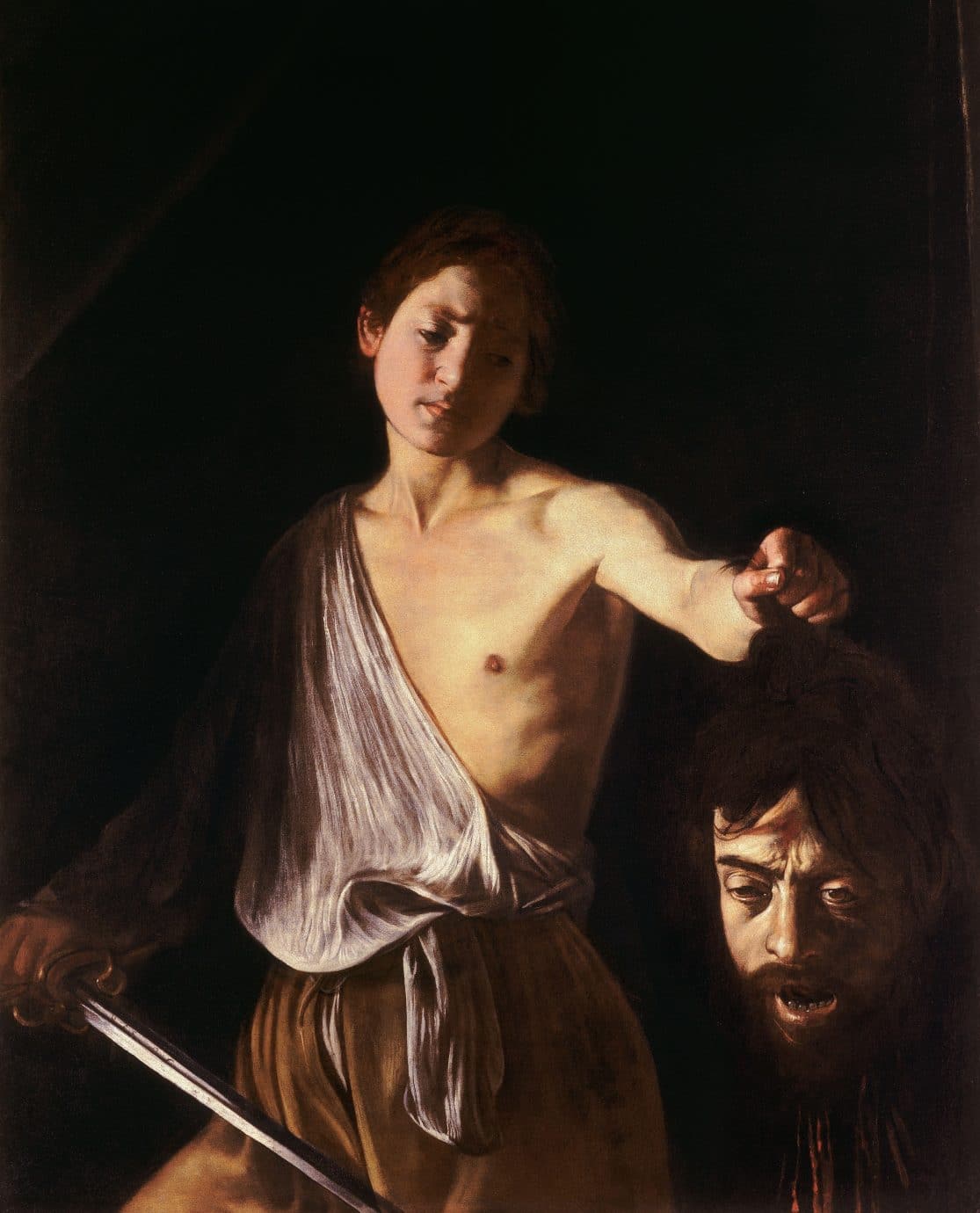
So when he does the exact same thing again in David with the Head of Goliath, painted during his fugitive years, it isn’t a one-off gesture. The painting is broadly understood as Caravaggio depicting himself as a wicked person who has already paid, already been punished, with young David’s face revealing disgust and pity rather than triumph. There’s a barely legible inscription on the sword blade, likely a reference to Augustine’s line about humility conquering pride.
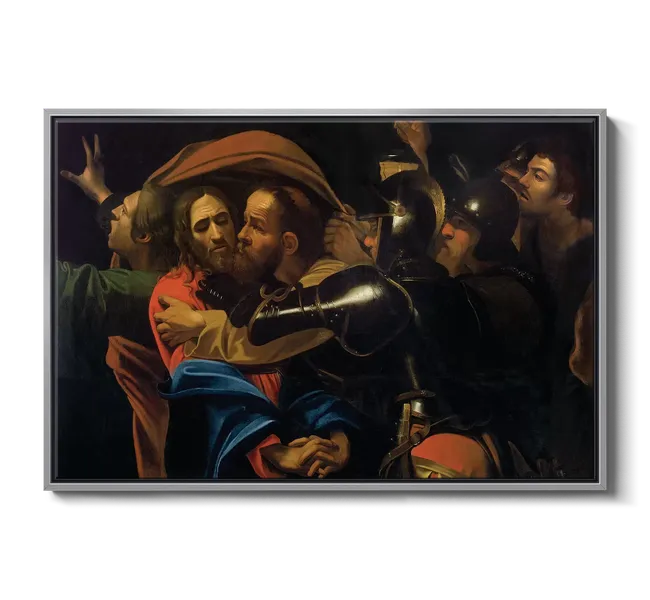
The Taking of Christ, now at the National Gallery of Ireland, shows Judas identifying Jesus with a kiss as armored soldiers close in and a disciple flees into the dark. Caravaggio painted it in 1602, four years before he became a fugitive himself. It’s hard to look at a man being seized in the dark and not think about the years Caravaggio would spend being hunted through Italy himself.
The Decapitation of St. John the Baptist, still hanging where he installed it in the Oratory of St John’s Co-Cathedral in Malta, is his only signed work, and he signed it in the blood pouring from the Baptist’s throat. He’d just become a Knight. He was, for a brief window, exactly the respectable man he’d been trying to become. Then it fell apart within weeks.
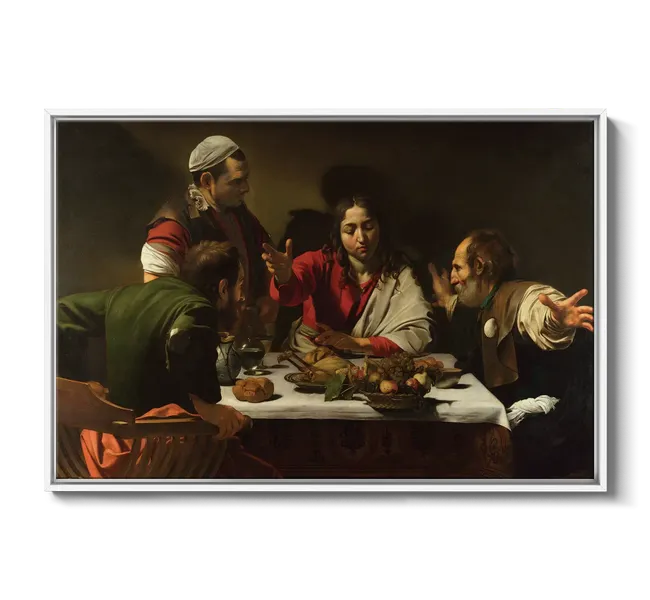
And The Supper at Emmaus, painted right around the time of the killing, pushes the table so far toward the viewer that a basket of fruit balanced on its edge looks like it’s about to tip off into your lap. Nothing in a Caravaggio painting sits still. Even the food looks like it’s about to move.
Why We’re Still Talking About Him
He never ran a formal workshop, which means he never had students in the traditional sense. He didn’t need them. Painters who never even met him, working decades later,absorbed his use of dramatic shadow and gritty realism so thoroughly that art history gave them a collective name: the Caravaggisti. Rubens, Rembrandt, Bernini, all of them working in his shadow, sometimes literally.
For a while, that influence faded from view. Tastes moved on, and Caravaggio spent a long stretch out of critical fashion before scholars rediscovered and reassessed him properly in the twentieth century.
Bringing That Same Weight Home
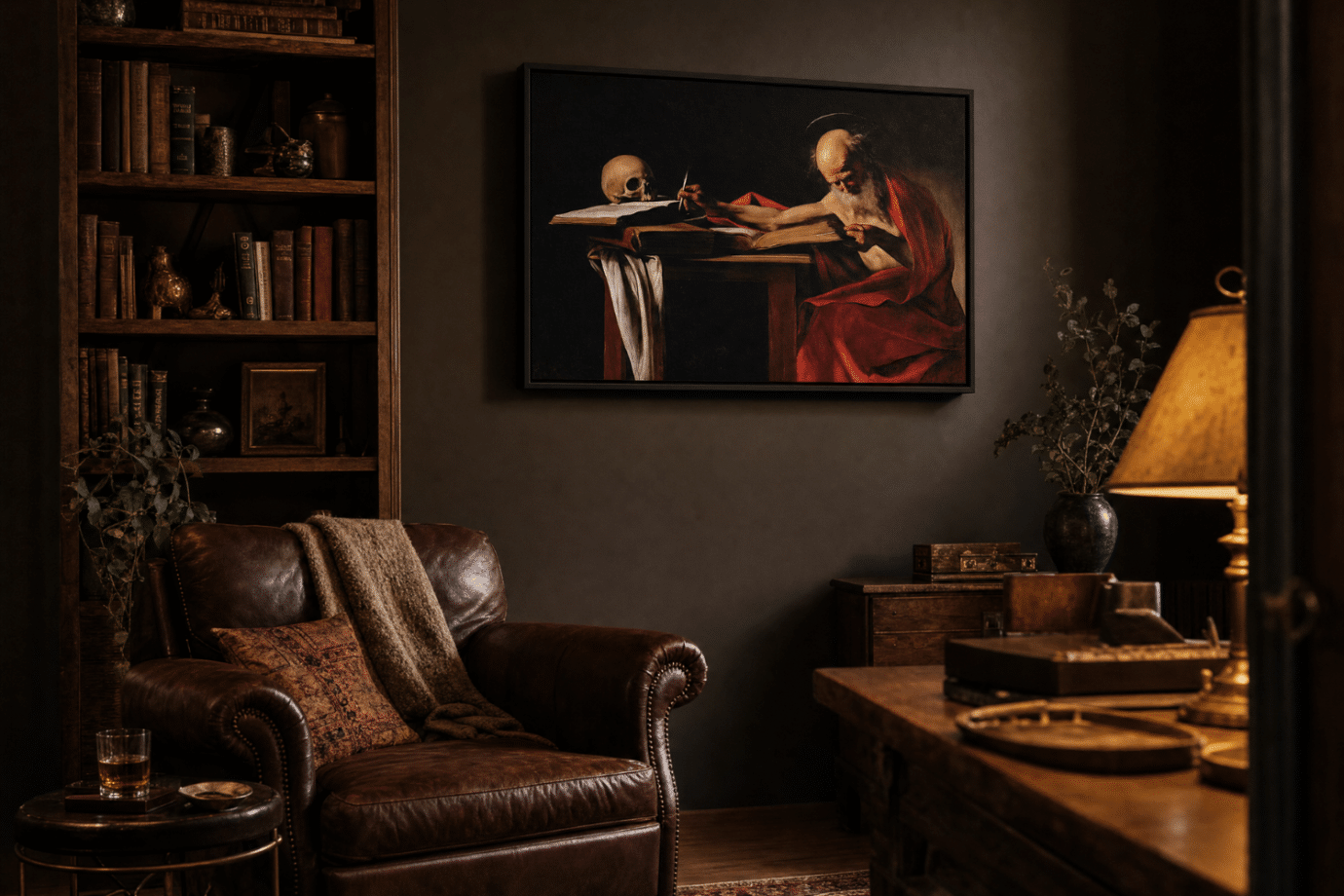
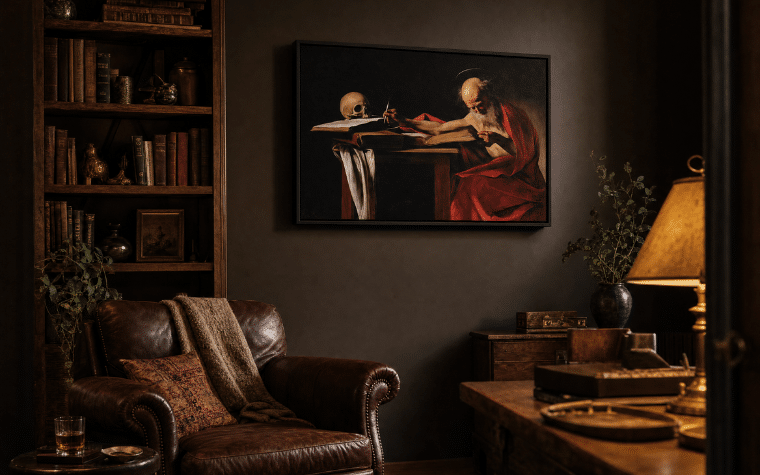
A Caravaggio piece brings that same dramatic depth into a room, whether it’s a study, a den, or any space that calls for something with a little more weight to it.
Browse the full Baroque collection, or check out Caravaggio’s full collection.